Layout Planning
Bed Frame Height: What Works and What to Buy
How bed frame height adds up - frame, clearance, mattress - with verified heights from three real frames and the math for choosing between them.
By Mara Bennett · Published July 2, 2026 · Updated July 2, 2026
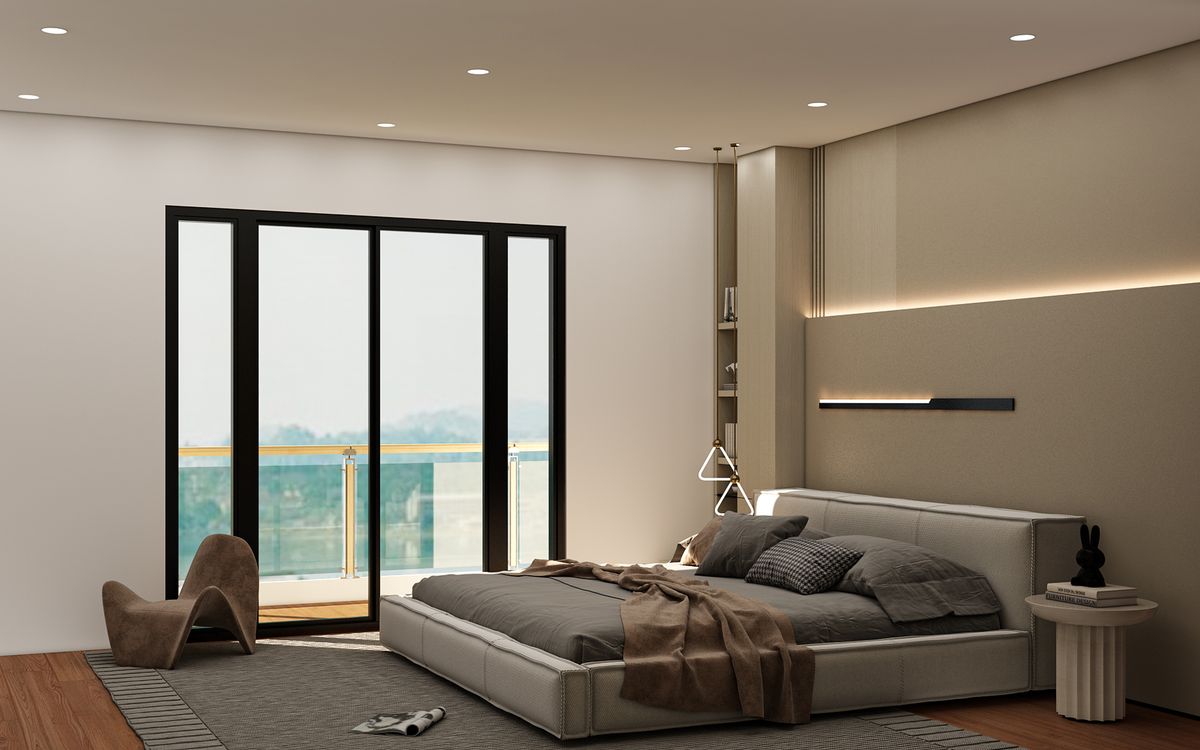
Height is the bed frame specification people skip and then feel every morning. The frame decides how tall the bed stands, how much floor hides beneath it, and whether getting in and out feels like sitting into a chair or lowering into a pit - and unlike mattress firmness, height is visible from the doorway, so it also shapes how big the room reads. The topic sounds trivial until you meet it in person: a frame bought for looks that turns out 10 cm (4 in) taller than the nightstand, or a low platform that makes a tall sleeper’s knees file complaints. This guide breaks height into its working parts, checks the numbers against three real frames, and then matches heights to bodies and rooms.
The height stack: what you are actually choosing
Bed height is three numbers stacked. The frame height is what the product page sells - measured from floor to the top of the slats or platform. The clearance is the open space under the frame, which is where storage lives and vacuums roam. The mattress height adds 20-30 cm (8-12 in) on top of the frame for a typical mattress, more for plush or pillow-top models.
The number that matters for daily life is the total: mattress top at 45-55 cm (18-22 in) matches a chair seat, which is the height most bodies find natural for sitting down and standing up. The number that matters for the room is the clearance, because it decides whether the bed can store things, hide them, or do neither. And the number that matters for looks is proportion: in a room with a 2.5 m (8 ft) ceiling, a tall frame plus a tall headboard plus a tall mattress can eat the vertical budget that makes the space feel open.
Clearance heights and what they hold
The space under a frame sorts into three working bands. Under 10 cm (4 in), the gap is a dust zone - good for nothing but the vacuum’s flat head. From 15-20 cm (6-8 in), low-profile storage fits: flattish bins, drawers designed for low frames, and vacuum bags. From 25 cm (10 in) up, standard lidded boxes slide under, and at 30 cm (12 in) the under-bed zone becomes a genuine storage room.
Two measurement details keep the numbers honest. Measure the frame’s lowest edge, not its legs - a side rail or a cross beam often hangs lower than the corner posts, and bins judged by leg height fail on rail height. And remember the mattress overhangs the frame on some designs, which steals 2-3 cm (about 1 in) of working clearance at the edges. Both traps are five seconds to check with a tape and the reason half of all “it should fit” purchases do not.
How I picked these three
The picks represent the three height classes with their actual, verified numbers - a low platform, a standard upholstered frame, and a tall traditional frame - because height advice only means anything when it is attached to real furniture. Every height below comes from the manufacturer’s own specification pages at the time of writing, in their published figures, converted at 1 in = 2.54 cm. I chose frames across the price range deliberately: height mistakes happen at every budget, and the fix is the same tape measurement whether the frame costs $230 or four times that. One frame on this list publishes no US queen price I could verify at writing time, and I have flagged that honestly rather than printing a guess.
Pick 1: Floyd The Bed
Floyd The Bed is the low benchmark, and its numbers are unusually well published: on Floyd’s own specification page, the frame stands 19 cm (7.5 in) tall overall with 15 cm (6 in) of clearance beneath, in a queen footprint of 170 x 218 cm (67 x 86 in) for the frame-only configuration. The design is modular - birch panels and powder-coated steel supports tensioned with nylon ratchet straps, no tools for assembly, and panels that can be added or removed to change the bed’s size. The queen frame supports up to 340 kg (750 lb) by Floyd’s spec. Floyd’s site lists the Original starting at $1,070 in regular pricing (member pricing runs lower), with the figure varying by size and finish.
The trade-offs are the low profile’s own. Fifteen centimetres of clearance holds only flat storage - a suitcase, some flattish boxes - so the floor beneath is mostly visual, not usable. Getting up from a bed that stands 40 cm (16 in) tall with the mattress is genuinely harder on knees than a standard height, which some bodies will notice every morning. And the tool-free ratchet system has a small learning curve on first tensioning. What the height buys back is the strongest visual open-up of any frame class: floor runs unbroken under the bed, and in a small room that unbroken line reads as space.
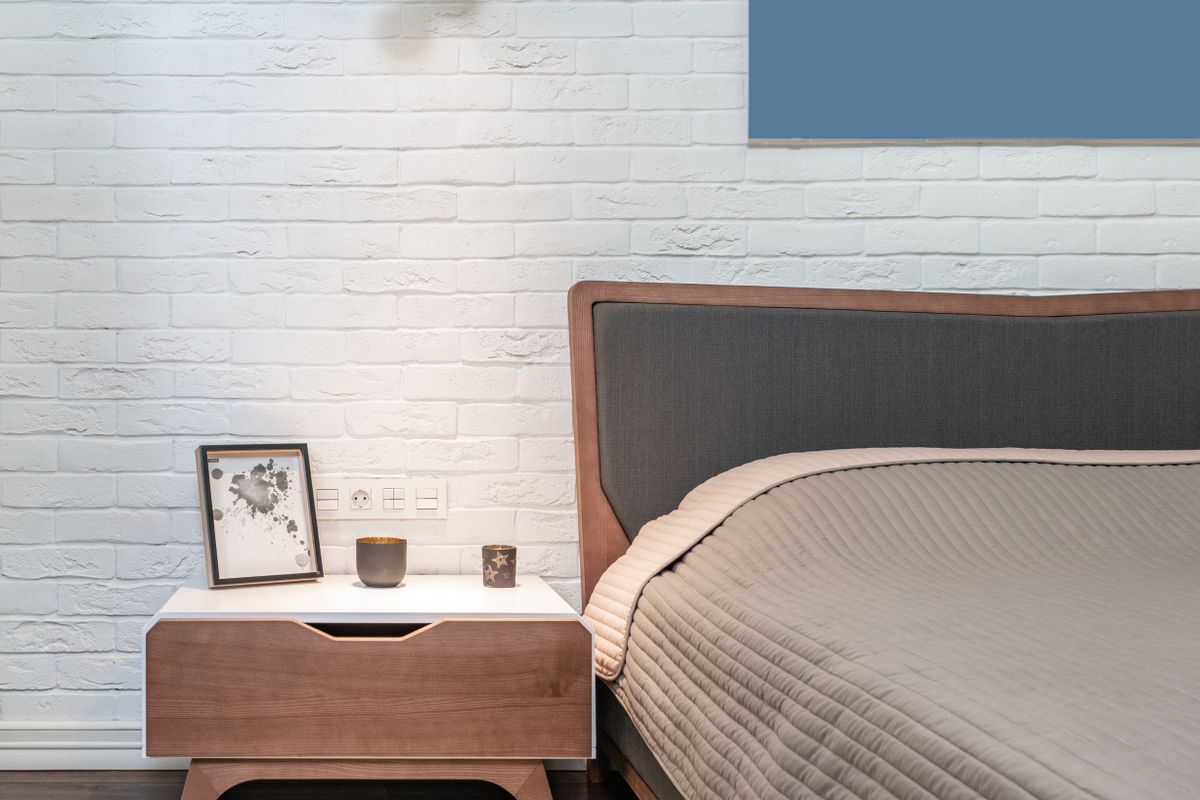
Pick 2: IKEA SLATTUM upholstered bed frame
The IKEA SLATTUM upholstered bed frame is the standard class, and its published heights are the ones to memorize as the baseline. IKEA’s specification pages list a free height under the bed of 20 cm (7 7/8 in), a headboard height of 85 cm (33 1/2 in), and a footboard height of 40 cm (15 3/4 in), with the slatted bed base included and no midbeam required. Twenty centimetres of clearance is the working minimum for low-profile storage - shallow bins and vacuum bags slide under, standard boxes do not - and the upholstered headboard lands at a natural lean-back height for reading.
The trade-offs sit in the upholstered surface and the open gap. Fixed fabric is not washable on this frame, which matters in kids’ rooms and for anyone with allergies - IKEA’s care instructions call for vacuuming, not washing. The 20 cm (7 7/8 in) gap is open on all sides, so it shows whatever slides under it; lidded, matching bins keep it tidy, loose items turn it into visible clutter. I could not verify a US queen price for the SLATTUM at the time of writing, so no price is printed here - check IKEA’s US page for your market’s current figure. As a height reference, though, the frame’s numbers are exactly the standard class in miniature: a hair over chair-seat clearance, a headboard at reading height, a footboard low enough to sit on the mattress edge comfortably.
Pick 3: IKEA IDANÄS bed frame
The IKEA IDANÄS bed frame is the tall class, and the difference shows immediately in its published numbers: height under furniture of 25 cm (9 7/8 in), a headboard of 112 cm (44 1/8 in), and a footboard of 63 cm (24 3/4 in), per IKEA’s specification page. That 25 cm clearance takes standard lidded storage boxes without argument, and IKEA’s own materials note says the frame leaves plenty of space under the bed for storage boxes - a rare case of a maker stating the use case outright. The adjustable bed sides accept different mattress thicknesses, and the frame’s traditional silhouette, with turned legs and a spindle headboard, anchors a room that the low platforms deliberately do not.
The trade-offs are the height’s own. The tall footboard at 63 cm (24 3/4 in) sits well above mattress-top height, which some sleepers find restrictive and others find protective of pillows - it is a matter of sleeping style, and restless sleepers who splay across a queen should test the footboard’s reach before committing. The headboard at 112 cm (44 1/8 in) claims the wall visually, which is either the room’s anchor or its bulk depending on ceiling height. On price: the white king lists at $439 on IKEA’s US site at the time of writing, with other sizes priced separately - I could not verify the US queen figure at writing, so the comparison table leaves that cell open.
Side-by-side: the heights
The three frames bracket the height spectrum, and the table collects their published figures as listed by the manufacturers at the time of writing - verify current specs for your size before ordering, since height under furniture varies slightly by bed size on some models.
| Floyd The Bed | IKEA SLATTUM upholstered bed frame | IKEA IDANÄS bed frame | |
|---|---|---|---|
| Frame height | 19 cm (7.5 in) overall | Standard class | Tall class |
| Clearance under | 15 cm (6 in) | 20 cm (7 7/8 in) | 25 cm (9 7/8 in) |
| Headboard height | Optional add-on, low | 85 cm (33 1/2 in) | 112 cm (44 1/8 in) |
| Footboard height | None | 40 cm (15 3/4 in) | 63 cm (24 3/4 in) |
| Storage the gap holds | Flat bins only | Low-profile bins, vacuum bags | Standard lidded boxes |
| Price (US, verified) | From $1,070 (starting, regular) | Not verified at writing | $439 (white king) |
Matching height to body and room
Bodies first. Sit on the edge of a chair with feet flat: that seat height is your body’s answer to the total bed height question. Sleepers with knee or hip sensitivities should keep the mattress top at 50 cm (20 in) or above, which means a standard or tall frame with a normal mattress - a low platform plus a thin mattress can drop the total below 40 cm (16 in), and standing up becomes a ceremony. Taller bodies over 185 cm (6 ft 1 in) often prefer the same higher numbers for legroom along the bed’s length, not just at the edge.
Then the room. Low frames read bigger: they shorten the bed’s silhouette, expose floor, and suit rooms under 10 m² or ceilings under 2.5 m (8 ft). Tall frames anchor: they suit larger rooms and pair naturally with tall wardrobes, but in a small room a 112 cm (44 1/8 in) headboard plus a tall mattress can crowd the vertical space the room needs to breathe. Storage needs split the difference - a room whose dresser has surrendered should be shopping in the tall-clearance band regardless of taste.
How to choose
Start with two numbers from your own bedroom: the mattress height you have, and the under-bed gap you need. If the total should sit near 45-50 cm (18-20 in) and the room reads small, Floyd The Bed is the benchmark - 19 cm (7.5 in) of frame, 15 cm (6 in) of floor-clearing lightness, and modularity that moves when you do. If the gap should hold vacuum bags and shallow bins at a standard budget, the IKEA SLATTUM upholstered bed frame’s 20 cm (7 7/8 in) clearance is the class standard. And if real box storage under the bed is the goal, the IKEA IDANÄS bed frame’s 25 cm (9 7/8 in) clearance takes lidded boxes without compromise.
Whatever the pick, measure before ordering: the frame’s lowest edge, the room’s nightstand height, and the doorway the boxes will travel through. The bed frames built for small rooms weigh storage and visual weight one dimension further, and the under-bed storage that fits shows exactly what each clearance band can hold.
The picks
Some links below are affiliate links — we may earn a commission at no extra cost to you.
Floyd The Bed
Best for: Small rooms and visual lightness, with flat storage only
The published specs are the low benchmark: 19 cm (7.5 in) overall with 15 cm (6 in) of clearance, tool-free modular panels, and a queen weight limit of 340 kg (750 lb). The trade-off: the low gap holds flat bins at most, and getting up from the low total height is harder on knees than a standard frame.
IKEA SLATTUM upholstered bed frame
Best for: Standard-height needs on a standard budget, with low-profile storage
The published heights define the standard class: 20 cm (7 7/8 in) under the bed, an 85 cm (33 1/2 in) headboard, and a 40 cm (15 3/4 in) footboard, slats included with no midbeam needed. The trade-off: the fixed upholstery is not washable, and the open 20 cm gap shows whatever slides under it.
IKEA IDANÄS bed frame
Best for: Real box storage under the bed and rooms that want a tall anchor
The published heights jump the class: 25 cm (9 7/8 in) of clearance under furniture, a 112 cm (44 1/8 in) headboard, and a 63 cm (24 3/4 in) footboard, with adjustable bed sides for different mattress thicknesses. The trade-off: the tall footboard restricts sprawlers, and the spindle headboard claims the wall visually in small rooms.
Comparison
| Specification | Floyd The Bed | IKEA SLATTUM upholstered bed frame | IKEA IDANÄS bed frame |
|---|---|---|---|
| Frame height | 19 cm (7.5 in) overall | Standard class | Tall class |
| Clearance under | 15 cm (6 in) | 20 cm (7 7/8 in) | 25 cm (9 7/8 in) |
| Headboard height | Optional add-on, low | 85 cm (33 1/2 in) | 112 cm (44 1/8 in) |
| Footboard height | None | 40 cm (15 3/4 in) | 63 cm (24 3/4 in) |
| Storage the gap holds | Flat bins only | Low-profile bins, vacuum bags | Standard lidded boxes |
| Price (US, verified) | From $1,070 (starting, regular) | Not verified at writing | $439 (white king) |
Sources
- Floyd official product page, The Bed Frame (dimensions 7.5 in H, 6 in clearance, queen 67 x 86 in, weight limits; starting price $1,070 regular / $856 member): https://floydhome.com/products/the-bed-frame
- IKEA regional specification pages for SLATTUM upholstered bed frame (free height under bed 20 cm, headboard 85 cm, footboard 40 cm): https://www.ikea.com/mx/en/p/slattum-upholstered-bed-frame-vissle-dark-grey-incl-slipcover-for-headboard-oereryd-grey-beige-s39613485/
- IKEA US product page for IDANÄS bed frame, white (height under furniture 9 7/8 in, headboard 44 1/8 in; white King $439): https://www.ikea.com/us/en/p/idanaes-bed-frame-white-70458910
Frequently asked questions
- What is a good height for a bed frame?
- Aim for a total bed height - frame plus mattress - of 45-55 cm (18-22 in), which puts the mattress top near the height of a chair seat. Frame-only height varies with design: low platforms run 15-20 cm (6-8 in), standard frames 20-30 cm (8-12 in), and tall storage frames can top 30 cm (12 in) of clearance.
- How tall should a bed frame be for under-bed storage?
- For real storage, look for 20 cm (8 in) of clearance under the frame for low profile bins, and 25 cm (10 in) or more for standard lidded boxes. Measure the frame's lowest edge, not its legs - side rails often sit lower than the corners suggest.
- Are low bed frames bad for you?
- Not for sleeping - mattress support depends on the base, not the height. Low frames mainly cost effort when getting up, which matters for anyone with knee or hip issues, and they collect less visible under-bed space. For most sleepers the choice is about room proportion and storage, not health.