Small Spaces
The Best Daybeds for Rooms That Work Double Duty
Three daybeds I would put in a room that sleeps guests and lives another life by day - a pull-out double, a solid-wood trundle, and a sofa-back frame - with the numbers behind each.
By Mara Bennett · Published October 6, 2026 · Updated October 6, 2026
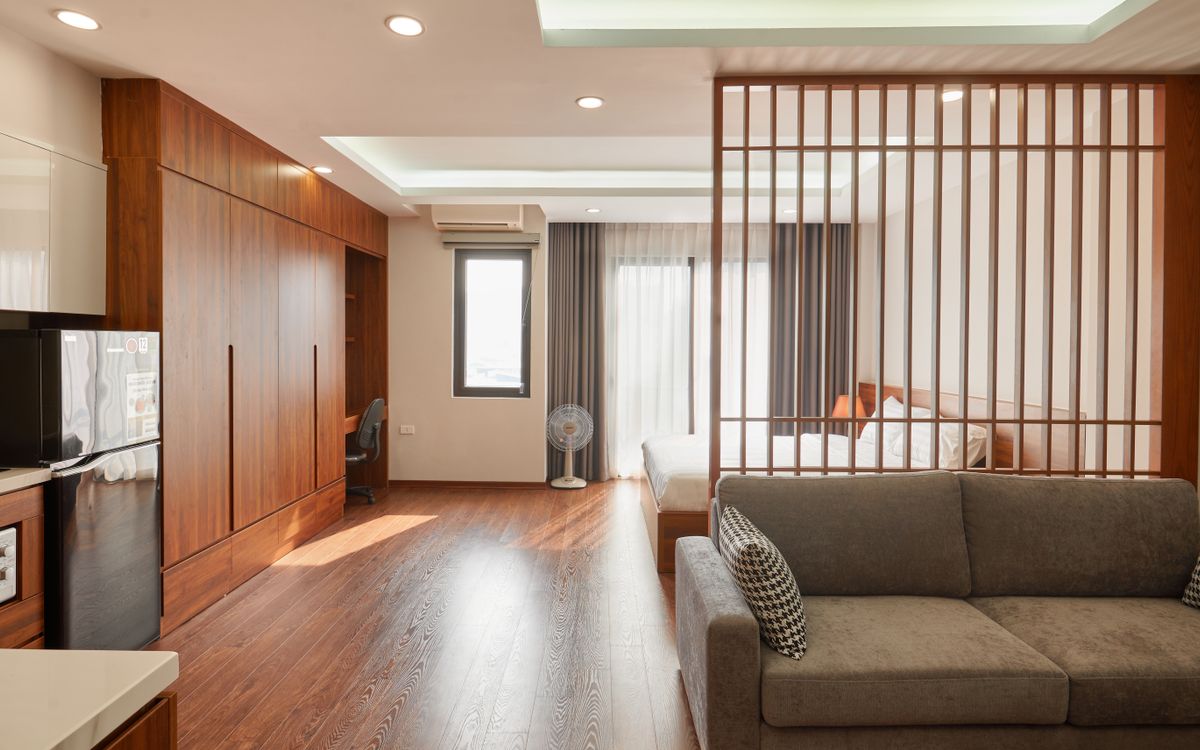
A daybed is the guest bed for people who do not have a guest room. It sleeps one every night, sleeps two in the pull-out formats, and spends the rest of its life as a sofa along a wall. In ten years of furnishing small apartments, it is the piece I reach for when a room has to be an office, a hangout, and occasionally a bedroom - because unlike a Murphy bed, it never asks you to clear the desk before bedtime, and unlike a fold-out couch, it uses a real mattress on a real slatted base.
What a daybed actually buys you
The honest comparison is against its two rivals. Against a sofa bed: a daybed wins on sleep quality, because sofa beds fold their mechanism into the sleeping surface and you feel it all night. Against a Murphy bed: a daybed loses floor space by day but wins on cost, weight, and installation - no wall anchoring, no structural carpentry, no ceiling-height minimums. It is furniture, not a construction project.
The footprint is the other half of the bargain. A twin daybed takes about 199 x 105 cm (78 x 41 in) of floor - barely more than a single bed - and the pull-out formats borrow an extra meter in front of the frame only on the nights you need it. That borrowing is the whole trick: the room plans around one footprint and pays for the second only occasionally.
The three formats, and who each one is for
Almost every daybed on the market is one of three things.
Pull-out doubles hide a second bed base under the seat. One person sleeps on top; pull the lower base out and two mattresses sit side by side as a double. This is the format for rooms that regularly host couples, and the best ones add deep drawers underneath.
Trundle daybeds roll a second low bed out from underneath on casters. The two beds stay separate - two singles, not one double - which makes trundles the choice for kids’ rooms, sleepovers, and guests who would rather not share.
Sofa-back frames are the simplest: a mattress on a frame with a real backrest, no second bed at all. They look most like a sofa, cost least, and suit rooms where guests are occasional and solo.
Every pick below was checked against the manufacturer’s own specification pages - dimensions, mattress requirements, and prices as listed at the time of writing. Verify current figures before ordering; all three brands move their prices around the year.
IKEA HEMNES Daybed Frame with 3 Drawers - the pull-out double with storage
This is the one I specify most, and the numbers explain why. The frame measures 199 x 105 cm (78 3/8 x 41 3/8 in) and 83 cm (32 5/8 in) tall; pull out the bed base and you get a 195 cm (76 3/4 in) wide double. It runs on two twin mattresses - stacked when you sleep solo, side by side for guests - and the three drawers underneath each take 51 x 70 cm (20 1/8 x 27 1/2 in) of bedding at a 20 kg (44 lb) load limit per drawer. On the manufacturer’s US listing it carries a 4.3 (3,970) rating across nearly four thousand reviews, which is the kind of sample you can actually trust.
The solid-pine bed base and lacquered frame read as real furniture, not dorm furniture, and the high sides make it convincing as a sofa with pillows stacked along the back. The trade-off: two mattresses means the single-bed stack sits slightly higher than a normal bed, and the pull-out needs about a meter of clear floor in front - plan for it or the drawer you open every morning will fight the room. At $449 it is also the cheapest way I know to give a small room a double bed, storage, and a sofa in one purchase.
Camaflexi Tribeca Twin Daybed with Twin Trundle - the solid-wood two-sleeper
When the sleepers should stay separate, the Tribeca is the build I point to. It is 100% solid pine with a 14-slat foundation for the daybed and a 12-slat one for the trundle - no box spring on either - and the manufacturer lists a 204 kg (450 lb) capacity for the daybed and 113 kg (250 lb) for the trundle. The frame is 74 x 107 x 198 cm (29 x 42.1 x 78.1 in) and the trundle slides out at 22 x 189 x 103 cm (8.5 x 74.5 x 40.5 in) from a 25 cm (10 in) clearance under the bed. Both beds take a standard twin mattress; the maker suggests 18-23 cm (7-9 in) thick for the daybed and about 18 cm (7 in) for the trundle.
It comes from a manufacturer that builds children’s furniture to US safety standards, which shows in the details: child-safe finish, water-based topcoat, sustainably sourced pine. It also means the styling leans youthful - the panel headboard reads slightly bedroom-like rather than sofa-like, so in a guest room I dress it with a tailored cover and long cushions to bring it back toward living-room territory. The trade-off: at $628.99 it is the priciest here, and the trundle’s thin profile means a thinner mattress up top than your own bed. Check your floor too - deep carpet makes caster trundles genuinely hard to roll.
IKEA FLEKKE Daybed Frame with 2 Drawers - the sofa that fronts as furniture
The FLEKKE is the pick for rooms where the daybed must look like a sofa first. Unlike the HEMNES, whose back is the wall and pillows, the FLEKKE has a real upholstered-height backrest that mounts on whichever side suits the room - 197 x 108 cm (77 1/2 x 42 1/2 in) of frame at 86 cm (33 7/8 in) tall, with an ash veneer finish that reads more living room than guest room. The mechanics match the HEMNES concept: two twin mattresses, stacked for one, side by side as a 202 cm (79 1/2 in) wide double when you lift and pull out the lower base. The two drawers inside measure 82 x 71 cm (32 1/4 x 28 in) but only 14 cm (5 1/2 in) deep, with a 20 kg (44 lb) limit each - bedding, not luggage. Price at the time of checking: $399.
The honest trade-off is construction class. The FLEKKE is veneered particleboard with honeycomb fill - lighter and cheaper than the HEMNES - and owner reports on durability are mixed, including one on the US listing describing a failed base board within a year. I would not specify it for nightly long-term use; for a room that hosts guests a handful of weekends a year, the sofa styling earns its keep.
The comparison, in numbers
| IKEA HEMNES Daybed Frame with 3 Drawers | Camaflexi Tribeca Twin Daybed with Twin Trundle | IKEA FLEKKE Daybed Frame with 2 Drawers | |
|---|---|---|---|
| Format | Pull-out double | Trundle (two singles) | Pull-out double, sofa back |
| Footprint | 199 x 105 cm (78 x 41 in) | 198 x 107 cm (78 x 42 in) | 197 x 108 cm (78 x 43 in) |
| Sleeps | 1, or 2 as 195 cm (77 in) double | 2 separate twins | 1, or 2 as 202 cm (80 in) double |
| Storage | 3 drawers, 18 cm (7 in) inside height | None | 2 drawers, 14 cm (5.5 in) inside height |
| Price | $449 | $628.99 | $399 |
Dimensions, capacities, and prices from the manufacturers’ specification pages at the time of writing; confirm current figures before ordering.
The two-mattress question
Pull-out doubles live or die by their mattress plan. The HEMNES and FLEKKE both specify two twin mattresses, 97 x 191 cm (38 x 75 in): they stack while the bed is a single and split side by side when it opens into a double. Buy real mattresses, not futon pads - 15-18 cm (6-7 in) of proper foam or innerspring per layer is the floor I work to - and the double you get at night will sleep like an actual bed, not like an apology. The stacking quirk is real: a two-mattress single sits noticeably high, so keep the top bedding fitted rather than loose, or the pile slides every morning.
For the trundle format, respect the thickness limit. The Tribeca’s trundle takes about an 18 cm (7 in) mattress because it has to close under the bed; exceeding it is the classic way people end up with a trundle that will not shut.
Making it read as a sofa
The styling that separates a daybed from “a bed in the living room” takes ten minutes and three moves. First, anchor the back: on backless frames like the HEMNES, a row of four to five large square pillows along the long side stands in for a backrest, and on the FLEKKE the built-in back needs only two accent pillows. Second, use a tailored cover - a fitted cover with clean corners reads upholstered, while a duvet reads bedroom. Third, keep one side open with a small table and lamp, which gives the piece a sitting function that is visible, not just theoretical. The same pillow logic I use for making beds read designed - proportions and layering rather than quantity - applies here almost unchanged.
The layout math
Measure for the frame plus two allowances: the pull-out or trundle needs its full travel in front of the bed - about 90-105 cm (35-41 in) - and the side you sit on wants the usual 45 cm (18 in) of clearance. In studio apartments this usually places the daybed against the longest wall with the open end toward the window, which is precisely the bed placement I default to in tight rooms anyway. If you are mapping the whole room around one, the zoning method I use for studio apartments takes the remaining floor and assigns it before you buy anything.
When a daybed is the wrong tool
Three cases send me elsewhere. If the room hosts a couple every weekend, the pull-out double works but a real bed with storage drawers underneath sleeps better for similar money. If the room has floor space to spare but no wall structure, a Murphy bed reclaims the entire footprint by day, which a daybed never can. And if the daybed would be the primary bed for a full-grown adult every night, skip the category and buy a proper frame - a daybed’s narrow width and sofa styling are compromises that only pay off when the room genuinely has a second identity.
The picks
Some links below are affiliate links — we may earn a commission at no extra cost to you.
IKEA HEMNES Daybed Frame with 3 Drawers
Best for: Small rooms that need to host couples occasionally and store bedding all year
One footprint gives you a sofa-height single, a 195 cm double for two, and three deep bedding drawers - the cheapest way I know to put all three functions in one room. The trade-off: two stacked mattresses make the single mode sit high, and the pull-out needs about a meter of clear floor in front.
Camaflexi Tribeca Twin Daybed with Twin Trundle
Best for: Kids' rooms, sleepovers, and guests who prefer two separate beds
Solid pine construction with slatted foundations on both beds, a 450 lb daybed and 250 lb trundle capacity, and safety-standard finishes - it is built like real furniture. The trade-off: the trundle's thin profile limits its mattress to about 7 inches, and the styling leans youthful rather than sofa-like.
IKEA FLEKKE Daybed Frame with 2 Drawers
Best for: Rooms where the daybed must read as a real sofa every day
A genuine backrest that mounts on either side, ash veneer panels, and the same two-twin pull-out double as the HEMNES at a lower price. The trade-off: lighter particleboard construction with mixed owner reports on durability, and shallow 5.5-inch drawers.
Comparison
| Specification | IKEA HEMNES Daybed Frame with 3 Drawers | Camaflexi Tribeca Twin Daybed with Twin Trundle | IKEA FLEKKE Daybed Frame with 2 Drawers |
|---|---|---|---|
| Format | Pull-out double | Trundle, two singles | Pull-out double, sofa back |
| Footprint | 78.4 x 41.4 in (199 x 105 cm) | 78.1 x 42.1 in (198 x 107 cm) | 77.5 x 42.5 in (197 x 108 cm) |
| Sleeps | 1, or 2 as 77 in double | 2 separate twins | 1, or 2 as 79.5 in double |
| Storage | 3 drawers, 7.1 in inside height | None | 2 drawers, 5.5 in inside height |
| Mattresses | Two twins, stacked or side by side | Twin + 7 in trundle twin | Two twins, stacked or side by side |
Sources
- Manufacturer specification pages: ikea.com (HEMNES Daybed Frame with 3 Drawers, FLEKKE Daybed Frame with 2 Drawers), camaflexi.com (Tribeca Wood Panel Twin Size Daybed with Twin Trundle) - accessed at time of writing
- Owner rating for the IKEA HEMNES daybed as displayed on the manufacturer's US product listing (4.3 across 3,970 reviews)
Frequently asked questions
- Is a daybed comfortable for everyday sleeping?
- With a real mattress on a slatted base, yes - the frame is just a bed with three sides. What matters is the mattress: a proper twin mattress performs like any platform bed. Thin futon-style pads are what give daybeds a bad reputation.
- What mattress goes on a daybed?
- Most daybeds take a standard twin mattress, 38 x 75 in (97 x 191 cm). Pull-out models like the IKEA HEMNES use two twin mattresses - stacked for single use, side by side when pulled out into a double. Check the manufacturer's thickness range before buying.
- How much floor space does a daybed need?
- A twin daybed occupies roughly 199 x 105 cm (78 x 41 in) of floor, close to a single bed's footprint. Add room to pull out a trundle or drop-down base - usually another 90-105 cm (35-41 in) in front of the frame - and keep that strip clear in your layout.