Style Ideas
How to Style a Bed Like a Designer
The four-layer bedding method and the pillow formula designers use, with counts and sizes by bed size, plus how to keep the look with a two-minute daily reset.
By Mara Bennett · Published May 12, 2026 · Updated May 12, 2026
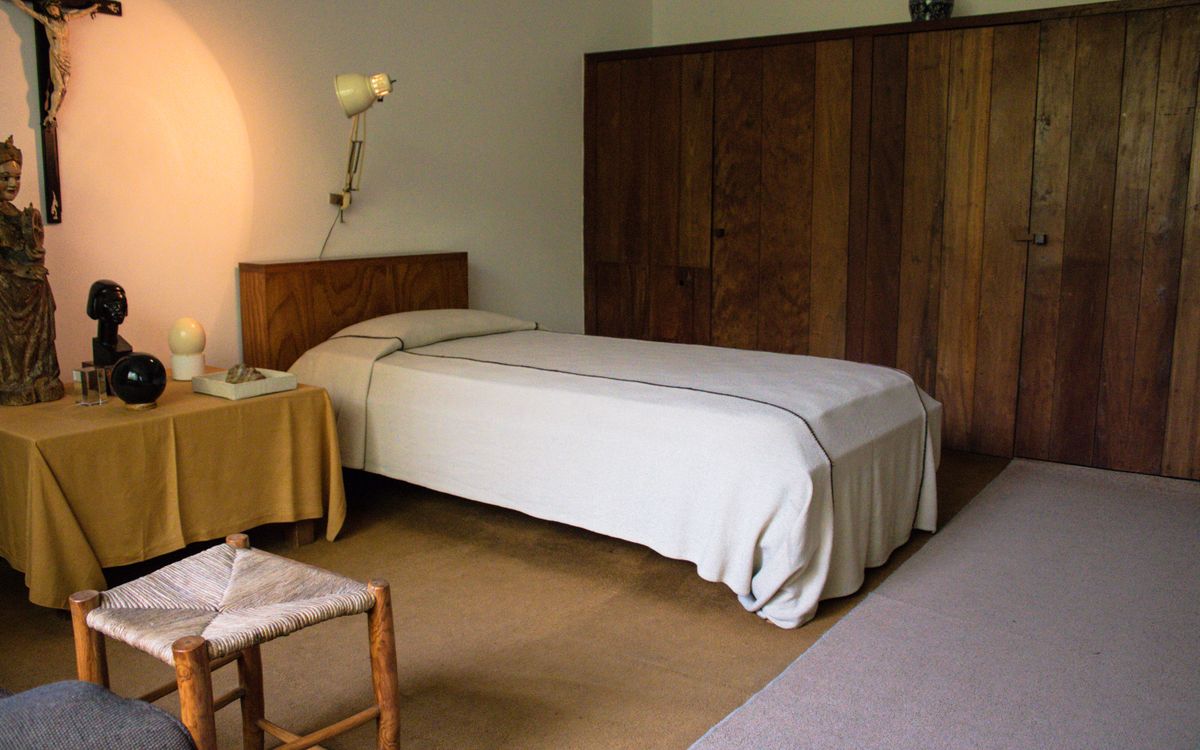
A styled bed is the highest-leverage styling move in any bedroom, because the bed is the largest object in the room and the only one seen at close range every day. The good news is that the designer look is procedural, not expensive - it is a four-layer method and a pillow formula, executed in a fixed order. Once you learn the sequence, a bed takes about five minutes to make and two minutes to reset.
The four layers, in order
Every styled bed, whatever its style, is built from the same four layers: the fitted sheet, the flat sheet, the cover (duvet, quilt, or coverlet), and the throw. The order never changes. What changes between styles is the fabric weight, the palette, and how far back each layer folds.
The reason the order matters is drape: each layer sits softer and more loosely than the one beneath it. Crisp at the mattress, increasingly relaxed toward the top - that gradient is what reads as “designed.” Reverse it, with a crisp cover over a soft base, and the bed looks made but never styled. If you want the fabric logic underneath this, my layering bedding textures piece covers how weights and weaves stack without bulk.
Layer one and two: the crisp base
The fitted sheet should be pulled genuinely tight - no wrinkles at the corners, edges aligned with the mattress. This is the layer that separates a styled bed from a made one, and it is also the layer people skip. The flat sheet goes on with its wide hem at the head, folded back over the blanket edge by 15-20 cm (6-8 in) so the hem shows as a clean band above the duvet.
Pressing is the difference between good and showroom, but it is optional in daily life. What is not optional is the fold-back: that visible band of flat sheet is what makes the bed read layered even before any pillows go on. In white-on-white beds especially, the hem band and the duvet edge do all the graphic work.
Layer three: the duvet drape
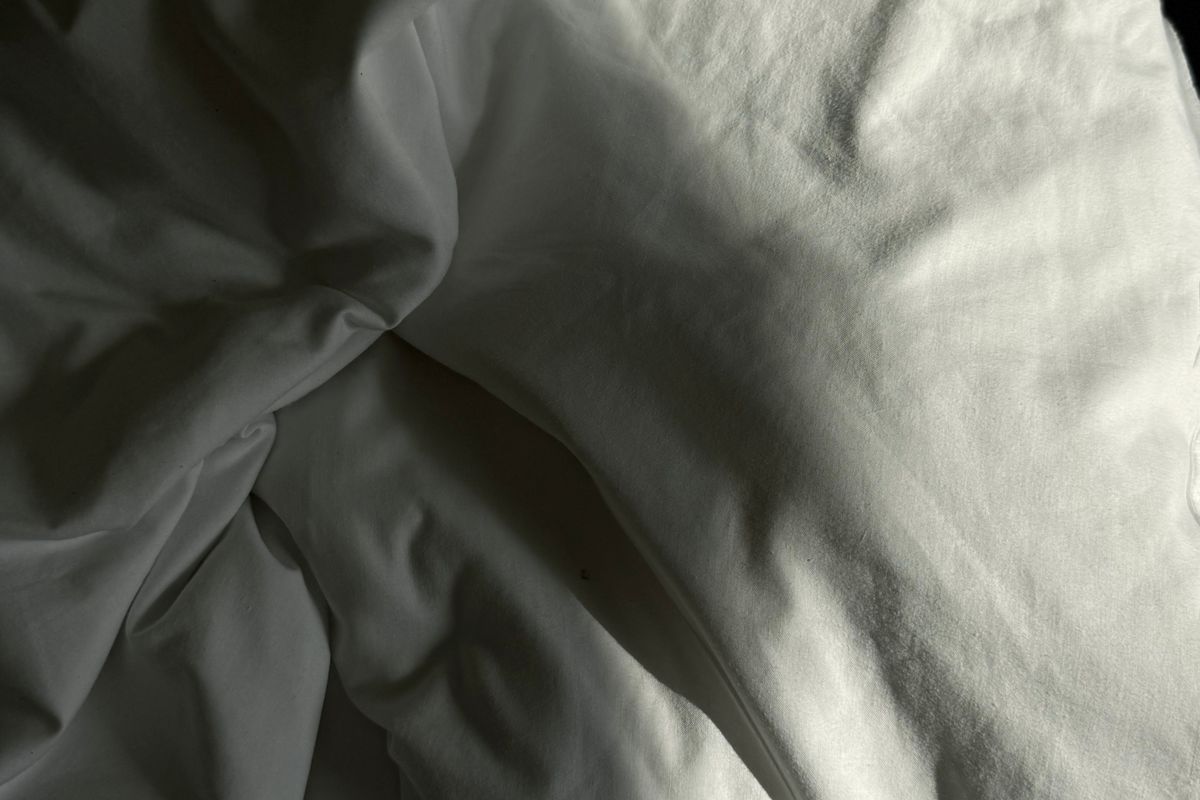
The cover layer carries the styling decisions. Three drapes cover every situation. The hotel drape - duvet folded back over itself at the top third, flat sheet band showing - is the crisp, formal read. The half-turned drape - cover folded back just enough to expose the sheet at the pillows - is the daily-life standard. The loose throw-over, with the cover rumpled deliberately and the sheet band showing, is the casual editorial look that suits linen and relaxed rooms.
Whichever drape you choose, the top edge of the cover should sit level across the bed, and its side drape should fall evenly. Asymmetric drape is a look, but it only works when the rest of the bed is strict - symmetry in the structure is what licenses looseness on top.
Layer four: the throw
One throw, never two. It goes across the lower third of the bed, either folded in a neat rectangle draped over the foot, or tossed in a single soft diagonal fold from one side. The rectangle reads tailored and suits traditional and transitional rooms; the diagonal read suits casual and boho rooms.
The throw is also the easiest place to introduce the one accent texture or color the bed needs. A chunky knit over flat cotton, a patterned wool over plain linen - one contrast, used once. Two throws or a throw plus a matching blanket fold reads cluttered, which is why the layer stops at one.
The pillow formula
Pillows are where most styled beds are won or lost, and the formula is fixed: back to front, largest to smallest, odd or even counts by taste but strict symmetry left to right.
| Bed size | Sleeping pillows | Shams | Euro squares | Lumbar | Total |
|---|---|---|---|---|---|
| Twin / single | 1-2 standard | 1 standard | 0-1 | 1 | 4-5 |
| Full / double | 2 standard | 2 standard | 1 | 1 | 6 |
| Queen | 2 standard | 2 standard or king | 2 | 1 | 7 |
| King | 2 king | 2 king | 2-3 | 1 | 7-8 |
The stack order on a queen reads: two euro squares (66 x 66 cm / 26 x 26 in) flat against the headboard, the two sleeping pillows in shams in front of them, and the lumbar cushion (35 x 50 cm / 14 x 20 in) front and center. Shams should be a shade or two off from the duvet - close enough to belong, different enough to read as a deliberate layer. Sleeping pillows stay inside the stack; visible mismatched sleeping pillows behind the decorative ones undo the whole effect.

Color logic for the stack
Styling reads best when the palette gets quieter toward the back and louder toward the front - the reverse of the drape logic, and the two gradients together are what make the whole bed look considered. In practice: white or tone-on-tone sheets, a duvet one shade warmer or cooler, shams a third shade, and the accent color enters only on the lumbar cushion and the throw.
Two colors beyond the neutral base is the ceiling. A common failure is the opposite build - patterned duvet, patterned shams, patterned throw - where each layer is fine alone and the stack argues with itself. If your duvet is patterned, keep every pillow solid and let the throw pick up one color from the pattern.
The two-minute daily reset
The styled look survives daily use only with a reset routine, and mine is deliberately short. Morning: pull the duvet straight and fold back its top edge, straighten the flat sheet band, stand the euro squares against the headboard, replace the shams, drop the lumbar in front, refold or re-toss the throw. Skip the fitted-sheet remaking unless it has visibly slipped.
Weekly rather than daily: re-smooth the duvet’s cover, rotate the lumbar, and wash rotation for the decorative layer - shams and lumbar covers collect face oils fastest since they sit closest to heads. The reset rhythm matters more than perfection on any single morning; a stack that is 80 percent right every day beats one that is perfect on Sundays and neglected by Thursday.
Styling for real life
Three practical adjustments keep the formula livable. Hot sleepers: keep the duvet drape loose and skip the quilt layer - the styled look comes from structure, not from heavy layering, so a lighter cover styled strictly beats a heavy stack styled loosely. Allergy sufferers: encase the euro squares and shams in washable covers and treat them as decor-only - nothing in the stack except the two sleeping pillows needs to be slept on. Small rooms: run the formula one step short (skip the euro layer), because a seven-pillow stack visually widens a bed that a narrow room cannot afford.
If the bed is styled and you want the room to hold the standard, the guest bedroom essentials list shows which comforts guests notice first, and the headboard styles guide helps when the frame itself - not the bedding - is what needs restyling.
Frequently asked questions
- How many pillows should a styled bed have?
- A full designer stack is two sleeping pillows, two standard or king shams, one or two euro squares, and one lumbar cushion - seven to eight pillows on a queen or king. A tighter version runs five: two sleeping, two shams, one lumbar. Below four, the bed reads plain; above eight, it reads staged.
- Do euro pillows work on a queen bed?
- Yes. Two euro squares (66 x 66 cm / 26 x 26 in) sit back-to-back against the headboard on a queen with room to spare, and they form the tall back layer that makes the stack look designed. On a full-size bed, one euro is usually the better proportion.
- How do hotels get beds to look so styled?
- Hotels rely on three tricks: crisp pressed sheets pulled tight, a duvet folded back over itself at the top so the flat sheet shows as a band, and strict pillow symmetry. You can copy all three at home - the folded-back duvet does most of the visual work.