Color & Texture
Bedroom Texture Mixing: Rules of Thumb
The three-material rule for layering bedroom textures, how to weight each one, and the bedding stack order that makes a quiet palette feel finished.
By Mara Bennett · Published July 27, 2026 · Updated September 21, 2026
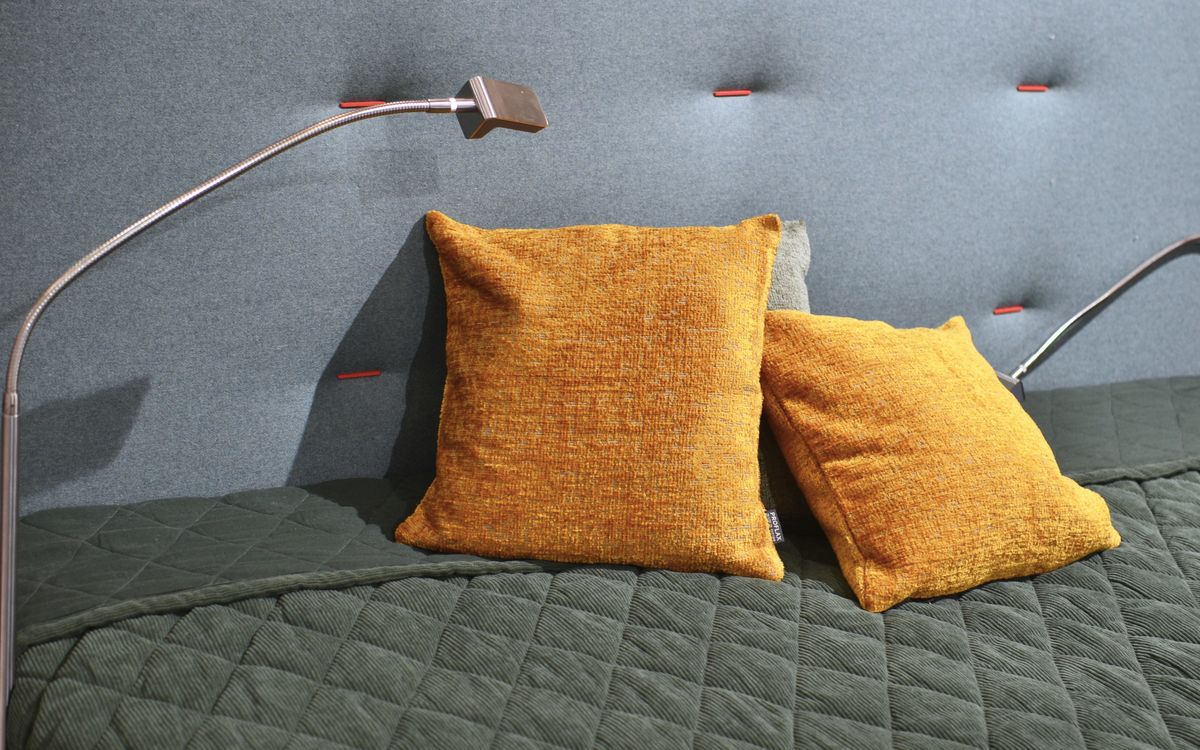
Color gets the attention, but texture is what actually finishes a bedroom. Two rooms can carry the identical palette - warm white, oatmeal, a touch of rust - and one feels styled while the other feels unfinished, and the difference is always surface: whether the eye finds linen weave beside smooth cotton, wool beside painted plaster, grain beside gloss. Texture is also the layer that keeps you warm and comfortable, so in a bedroom it does double duty that no other design decision does.
Why texture carries a quiet room
Most bedrooms want a calm palette, and calm palettes run out of color contrast quickly. Texture takes over where color stops: it creates the shadows, highlights, and variation that keep a limited palette interesting. A room of all-smooth surfaces reflects light evenly and reads flat, however well the colors are chosen; introduce one nubby surface and the same light starts working, catching on the weave, throwing small shadows across the bed.
This is why texture matters most in exactly the bedrooms people find hardest to style - small rooms, neutral rooms, rooms without much daylight. There is no room for a bold accent, but there is always room for a rougher surface next to a smooth one.
The three-material rule
I build every bedroom palette on three material families, and I hold the line at three.
One soft base. The materials that touch skin - washed linen, cotton percale, brushed cotton, velvet in small doses. This layer should dominate the bed, because it is the most touched surface in the room.
One rough or nubby layer. Wool, rattan, jute, boucle, slubbed linen, unglazed ceramic. This is the contrast engine: it catches light unevenly and keeps the room from feeling sterile. One or two pieces are enough - a throw, a basket, a lamp base.
One smooth or hard note. Painted wall, wood grain, metal, glass. This is the frame that keeps the soft layers from dissolving into fuzz. Without it, an all-textile room reads shapeless; the smooth note gives the eye an edge to organize against.
Three families, because that is roughly what the eye processes as “coordinated” before it starts processing “busy.” A fourth family almost always reads as an outlier unless it deliberately repeats one of the three.
The rule applied to a whole room

Mapping the whole room makes the rule concrete. The soft base: linen duvet and cotton sheets, a small velvet or brushed-cotton pillow. The rough layer: a wool throw across the foot of the bed, a rattan or seagrass basket beside the dresser, a ribbed ceramic bedside lamp. The smooth note: the painted wall itself, the wood floor, the glass of water on the nightstand - smooth notes are already in every room, which is why the job is usually just adding the rough layer and then balancing.
Notice that the floor participates too. A hard floor plus a rug of the right pile gives the room its biggest contrast line, and the rug counts as one of the three families, not a free extra. If the rug is wool, the throw should not also be wool - repeat the family, do not triple it. The guide to bedroom rug size and placement covers how to size that floor layer so it supports the palette instead of fighting the bed for attention.
The bedding stack, in layer order
The bed is where texture gets tested nightly, so the stack has a definite order that keeps it comfortable as well as good-looking:
- Fitted sheet and top sheet - the smoothest layers, closest to skin. Percale or sateen here; save the texture for above.
- Duvet or coverlet - the soft base in washed linen or brushed cotton. This is the single largest surface in the room and it sets the texture temperature for everything else.
- Sleeping pillows - plain, smooth cases; they read as calm from the doorway.
- Accent pillows - this is where texture earns its keep: one nubby weave, one slightly rougher linen, at most two to four pillows total.
- Throw - the roughest material in the room, laid diagonally or folded at the foot, so it breaks the horizontal lines of the bed.
The sequence matters because texture should increase with distance from skin. Anything that touches your face stays smooth; anything your hands or eyes touch can go rougher. That single ordering principle resolves most “why does this bed feel scratchy” problems before they happen.
Weighting: how much of each family
The rough layer is the accent, and accents stay minority shareholders. In a typical room the soft base covers most of the visible textile surface - bedding, curtains, the bulk of the pillows - while the rough layer holds maybe a fifth of the room’s visual area, and the smooth frame takes whatever is left. When a room feels busy, the usual cause is that the rough layer grew: three baskets, a jute rug, a wool throw, a rattan headboard, all individually good, together a flea market.
The weighting also shifts with room size. Small rooms want a lighter touch on the rough layer - one throw and one lamp base, because every surface is seen up close, where texture shouts. Large rooms can carry more rough material because most of it is viewed from farther away, where it reads as depth rather than noise.
How texture mixing fails
Three failure modes account for nearly every textured room that misses. Same-family stacking: five soft surfaces with no contrast - velvet on velvet on smooth cotton is still one family, and the room stays flat no matter how much was added. Scale collisions: two nubby materials at similar coarseness, like boucle against chunky knit, fight for the same visual job; make one of them finer. And the clutter route: solving flatness by adding objects instead of surfaces. Texture is a property of what is already in the room - swapping the duvet, changing a lamp shade, adding one throw - and the moment the fix involves six new purchases, the room has lost.
Testing before you buy anything
Texture can be auditioned for almost nothing. Before any purchase, assemble the candidates on the bed in daylight: drape the throw over the duvet you actually use, set the pillow stack as it will live, look from the doorway. Then turn on only the bedside lamp and look again at night, because texture changes character under raking light - nubby surfaces get more active, smooth ones get shinier. If the pairing survives both views, it will survive the year. For how this stack connects to the rest of the bed’s styling, the guide to styling a bed like a designer picks up exactly where the layer order here leaves off, and the piece on layering bedding textures goes deeper into the fabric-to-fabric choices.
Frequently asked questions
- How many textures should a bedroom have?
- Three main material families is the number that works in rooms of almost any size - one soft, one rough or nubby, one smooth or hard. More than three reads as clutter; fewer reads flat. Accents can go beyond the three only if they repeat one of the existing families.
- What textures work best in a bedroom?
- Linen or washed cotton for the soft base, wool or rattan for the rough layer, and smooth painted walls or wood grain for the smooth layer. Bedrooms benefit from at least one nubby material because it catches light and keeps a neutral palette from going flat.
- How do you add texture without adding clutter?
- Change surfaces, not objects - swap a smooth duvet for washed linen, add a ribbed ceramic lamp instead of another pillow, layer a wool throw over plain bedding. Texture is a surface quality, so it can be increased without buying more things.