Layout Planning
Arranging a Bedroom When the Window Sits Behind the Bed
How to make a window-behind-the-bed layout work - headboard and sill heights, layered light control, drafts, and when to pick a different wall instead.
By Mara Bennett · Published April 27, 2026 · Updated April 27, 2026
The window wall is usually the first wall ruled out for a bed and the last one reconsidered. That order is backwards in many small rooms, where the window wall is also the longest clean wall - uninterrupted by doors, closets, or radiator runs - and every alternative wall is 20 cm (8 in) too short. When I place a bed under a window deliberately, the layout tends to be the calmest one in the room: light behind the pillows, a view to wake up to, and no headboard looming over the sleepers. The failures I have seen all trace to three unhandled details: height, light, and moving air. Solve those and the window becomes the headboard.
Why the window wall gets ruled out too fast
Most of the objection is inherited from houses that no longer exist. Old single-pane glass leaked cold and noise, so a bed against it meant drafts on the neck and a century of advice condemning the placement. Modern double glazing, combined with a decent curtain layer, removes most of that physics - but the taboo survives on autopilot, and people force the bed onto a worse wall to comply with a rule their windows no longer trigger.
There is one legitimate planning cost to weigh: the window behind the bed takes the sill out of service and makes the bed the room’s fixed centerpiece. Curtains must be drawn from both sides of the bed, which is awkward in a bed-hug layout, and any headboard claims a portion of the glass. None of this is disqualifying. It just means the decision deserves a tape measure, not a reflex.
Handle the height first
Everything about a window-bed starts with sill height, measured from the floor to the bottom of the glass. Three cases cover nearly every room.
If the sill sits at or below 60 cm (24 in), the bed can sit in front of it with a headboard no taller than the sill, or with no headboard at all. The mattress top itself, at roughly 50-55 cm (20-22 in) on a standard frame, already guards the sill; a low platform frame leaves the glass even more open.
If the sill lands between 60 and 90 cm (24-35 in), a low headboard that stops just under the sill is the clean move. A slatted or open-frame design keeps the composition from looking blocked, and pillows lean against the headboard rather than the glass, which protects both the pillows and the pane.
Above 90 cm (35 in), the window behaves like a high strip and the bed can sit fully beneath it with a normal headboard up to the sill line. Only then does the placement stop making any compromise at all - measure before assuming which case your room is in.
Light control: layered curtains, not a single panel
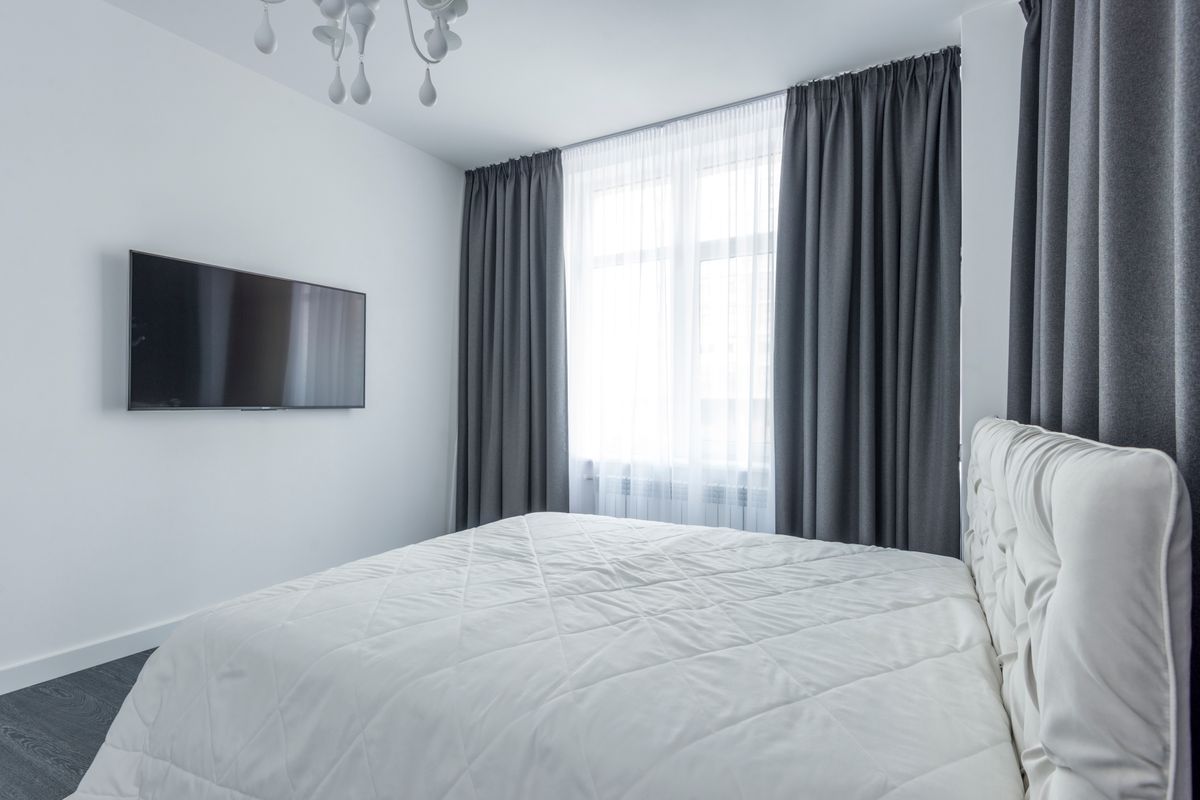
A bed under a window sleeps against the room’s brightest surface, so the curtain layer does double duty: darkness for sleeping, a frame for the composition. A single thin panel fails both jobs. The pairing I specify in nearly every project is a blackout layer hung wide and high - track or rod extending at least 15 cm (6 in) beyond the window on each side, so light does not leak around the edges - over a sheer layer that keeps the room daylight-soft during the day. The layering mechanics, tracks and hanging heights take some setup, but it is the difference between a window the bed merely tolerates and one the bed benefits from.
Morning light deserves a special note. Light directly behind the pillows is the cheapest styling there is, and in rooms with an eastern exposure it can also be the reason the sleeper wakes at six. If that sounds familiar, weight the blackout layer side, and pick a lining rather than hoping.
Drafts, radiators, and opening the sash
Two practical checks finish the environmental case. First, the radiator. In many older homes it sits directly under the window, and blocking it with a bed pushes warm air into the headboard and away from the room. A slatted headboard or a bed frame pulled 10 cm (4 in) from the wall lets air move; in winter this matters more than any styling consideration. Second, the sash. The window should still open for air, which favors low headboards or open frames - if the headboard makes the window unreachable, the placement has cost the room its ventilation, and that is the real dealbreaker the old rules were pointing at.
The styling move: treat the window as the headboard
Once height and light are solved, the composition falls into place faster than on a plain wall. Centered curtains, symmetric bedding, two low lamps on either side where the sill allows - the window supplies the vertical interest a headboard would otherwise fake. Beds under windows also photograph beautifully, which is not the point of a bedroom, but is a pleasant side effect of a placement that got everything else right.
Keep accessories below sill height on the bedside surfaces: tall lamps on a window-side nightstand fight the glass for attention. A small lamp, a book, and maybe a low vase are plenty; the window does the rest.
When to choose a different wall instead
The window placement is right when the window wall is the longest clean wall and the alternatives would eat the walkway. It is wrong in three situations. When the window is the room’s only ventilation and a headboard would block it. When the wall is short or broken by the radiator run, so the bed cannot center and blocks the sash instead. And when the sleeper is genuinely light-sensitive even with blackout layers - a layout that costs someone their sleep is a failed layout regardless of how good it looks.
If any of those apply, go back to the three bed placements that actually work and test the remaining walls with the same arithmetic. And if the whole room needs rethinking rather than one wall, the zoning method sorts sleep, dressing, and buffer space before any furniture moves.
A short checklist before you commit
Measure the sill height and match it to a headboard case: below, at, or above. Chalk the curtain rod line and confirm the blackout layer can overlap the window by 15 cm (6 in) per side. Check the radiator and plan the 10 cm (4 in) gap if it sits under the glass. Open the sash with the bed in place and confirm air still moves. Stand in the doorway: the bed should read as composed, not parked. Five checks, one tape measure, and the wall most people refuse becomes the wall the room was saving for its best piece of furniture.
Frequently asked questions
- Is it OK to put a bed in front of a window?
- Yes, if the sill is low enough to sit under with a low or open headboard, the window can still open for air, and layered curtains handle the drafts. In rooms where no other wall is long enough, the window wall is often the placement that leaves the best walkway.
- What kind of headboard works in front of a window?
- Low and open designs work best - a headboard no taller than the sill, or a slatted and open-frame style that keeps the glass visible and the sash reachable. Tall upholstered headboards block light and view, and they look unresolved against a window frame.
- How do you stop drafts when the bed is under a window?
- Layered curtains are the fix: a blackout panel hung wide and high on both sides of the bed, over a sheer layer that keeps daytime light. Pull the bed 10 cm (4 in) forward if a radiator sits under the window so air can still circulate.