Small Spaces
How to Make a Small Bedroom Look Bigger
Eight visual tricks that make a small bedroom read larger - light, line of sight, scale, and the specific mistakes that shrink a room - without moving a single wall.
By Mara Bennett · Published July 30, 2026 · Updated July 30, 2026
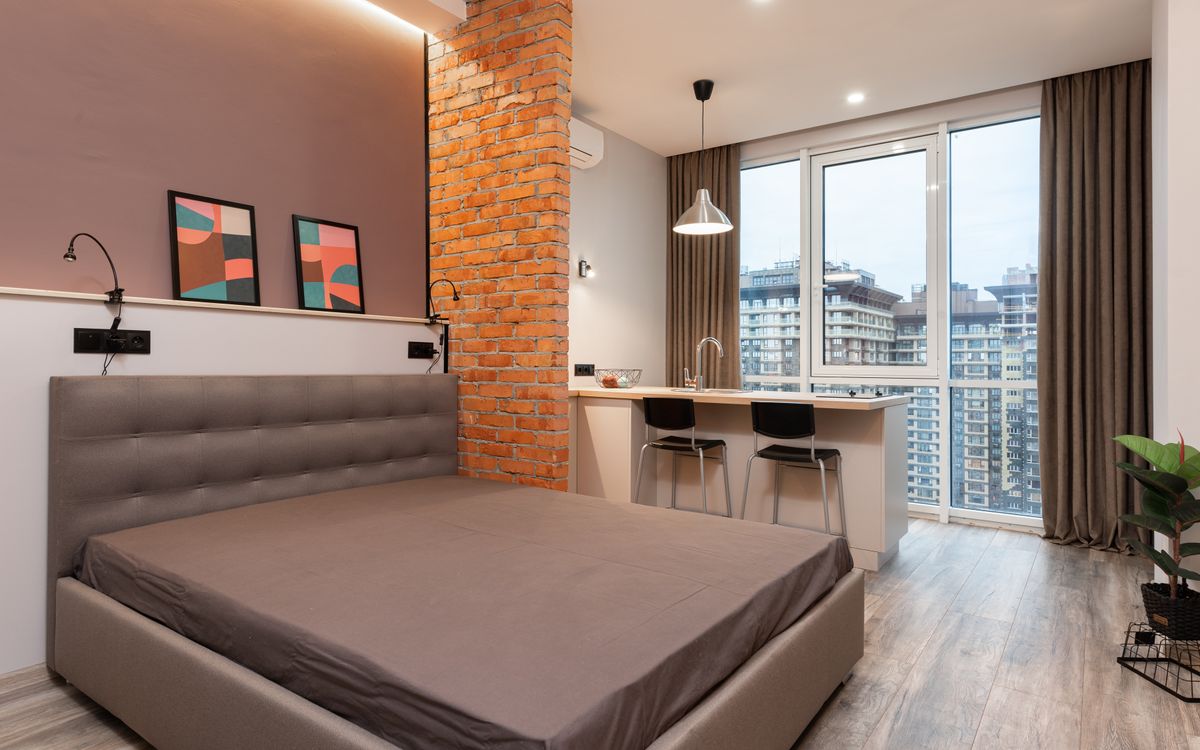
A small bedroom does not need to look small. The physical floor area is fixed, but how large a room reads is decided by a shortlist of visual factors - how much floor the eye can see, how far the sightlines travel, how many contrast jumps interrupt them - and every one of those factors is adjustable. These are the eight moves I make, in roughly the order I make them, on small rooms that feel cramped. None require a renovation; most require an afternoon.
1. Lower the furniture, empty the floor
The floor is the room’s credit rating: visible floor reads as space, floor covered in furniture legs and bins reads as crowding. Two levers change the ratio. First, choose low pieces - a platform frame, a 60 cm (24 in) tall dresser, a floor cushion instead of an armchair - so the room’s visible vertical mass drops. Second, get everything off the floor that does not need to stand on it: wall shelves, hooks, and the storage moves that live above eye level. A room where you can see skirting board run continuously in every direction feels about a size larger than its measurements.
2. One light colour story, low contrast
The fastest shrinking move in a small bedroom is high contrast: dark furniture, white walls, patterned bedding, all in one view. Every contrast jump tells the eye “edge here,” and edges are what make a box feel like a box. Pick a palette where walls, large furniture, and curtains sit within a few steps of each other - light neutrals are the easy version, but a room in layered sage or dusty blue does the same thing. Keep contrast for small objects: pillows, art, the throw. Large surfaces stay quiet.
3. Push the sightlines long
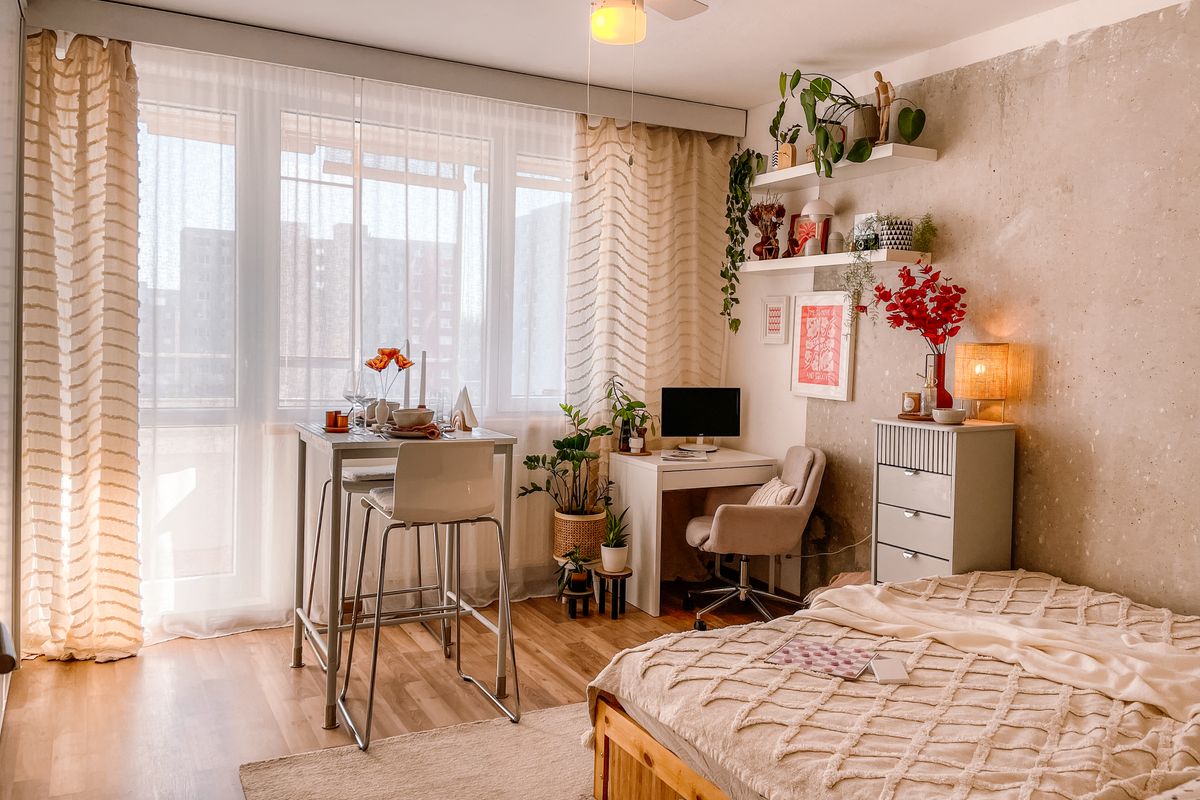
Every room has one or two directions in which the eye can travel unbroken before hitting a wall. Protect those corridors ruthlessly: no furniture blocking the view from the door to the window, nothing at the end of the longest sightline except something low or something open. In a square room the longest sightline is the diagonal, which is one reason corner-placed beds often make small rooms read bigger than centered ones - they leave the diagonal clear. This is the same logic behind the corner layout in a 10x10 room: the freed diagonal does the visual work.
4. Use the window, not the wall colour
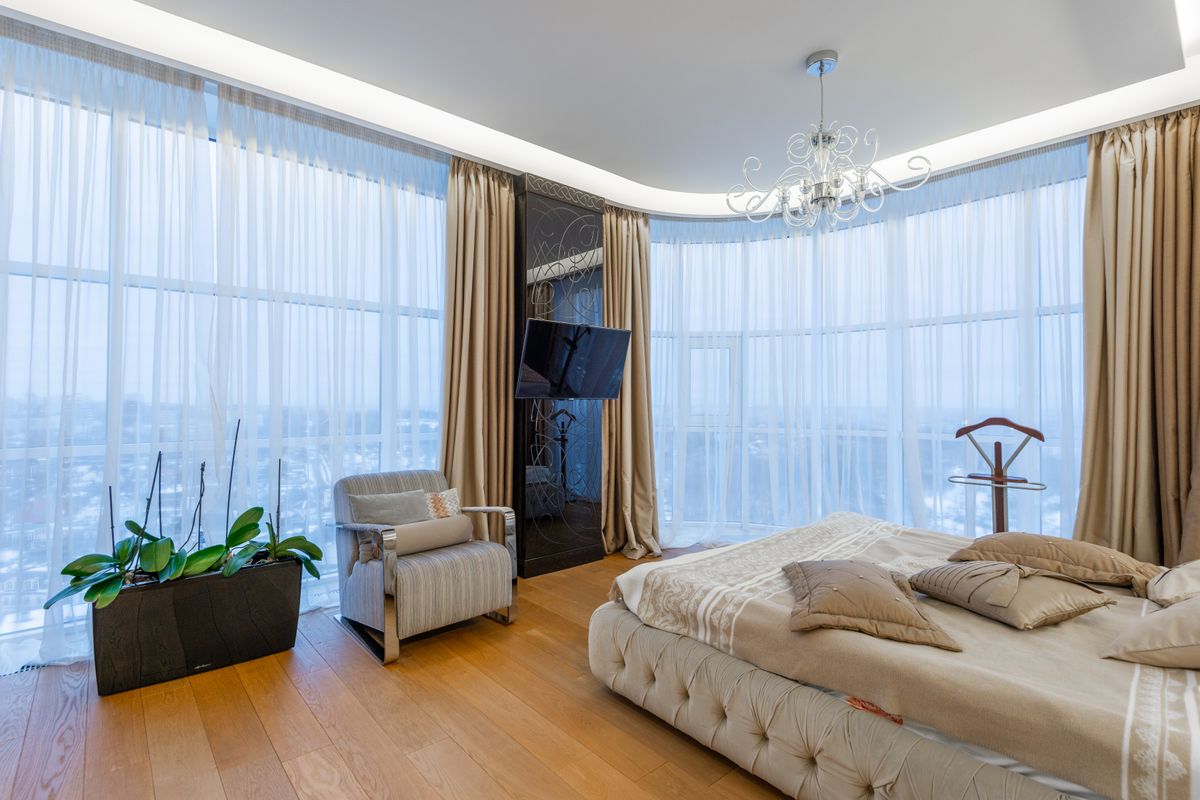
Daylight does more expanding work per hour than any paint. Three window habits shrink rooms, and all three are fixable: curtains hung inside the frame chop the window into a small square; curtains and walls in contrasting colours draw a hard edge; furniture parked in front of the glass blocks the light path. The fix is mounting curtains high and wide - rod 10-15 cm (4-6 in) above the frame and extending past it on both sides - in a fabric close to the wall colour, so the window reads as a wall-sized light source. Where privacy allows, sheer layers keep light coming in after the blackout layer opens.
5. Mirror the light, not the clutter
A mirror placed to reflect a window doubles the room’s brightest feature and adds a pseudo-second-window effect. Placed to reflect the bed or a busy corner, it doubles the mess. The working positions: opposite or adjacent to the window, on the wall perpendicular to the longest sightline, or a large leaning mirror where a wall would otherwise dead-end. A full-length leaning mirror does double duty in a bedroom - dressing use plus light use - and costs no floor beyond its 45 cm (18 in) lean.
6. Right-size the bed and shrink its silhouette
The bed is the biggest object in the room, so it sets the visual budget. If a size down is genuinely workable for how you sleep, the floor you recover is the cheapest expansion there is - each step between bed sizes is 15-25 cm (6-10 in) of width, and in a 3 m room that width is walkway. When the size is fixed, shrink the silhouette instead: a frame without a bulky footboard, a headboard no taller than 100-120 cm (39-47 in), bedding in the same family as the walls. A tall, dark, tufted headboard in a small room is a billboard that says “bedroom” from the doorway; a low neutral one lets the room introduce itself first.
7. Edit surfaces to thirds
Small rooms amplify visible clutter, and clutter is the one shrink factor that can undo everything above in a week. The surface rule I give clients: keep no more than a third of any horizontal surface - nightstand top, dresser top, sill - holding anything. The other two thirds stay empty, permanently. Alongside that, one weekly habit does most of the work: a basket or drawer per zone where the daily objects land when the day ends. Storage that takes ten seconds to use gets used; storage that takes a minute does not.
8. Layer the light warm and low
A single bright ceiling fixture flattens a small room into a lit box. Three sources at three heights - bedside lamp, a floor or wall light washing one wall, a small warm accent - give the eye gradients to read, and a room with light gradients reads as deeper than its walls. Keep bulbs in the warm range for evening and aim one light at the ceiling to lift the room’s vertical feel. In a rental where fixtures cannot change, the same effect comes from plug-in lamps; the layering method is the same.
A closing note on the anti-patterns, because they matter more than any single trick: oversized furniture scaled for another room, rugs too small for the bed zone (a rug that floats under the legs makes the floor look truncated), too many small objects instead of fewer large ones, and dramatic feature walls that stop the eye mid-room. Every one of these fights the eight moves above, and the room loses.
None of the eight tricks add a square metre, and that is the honest way to think about them: they do not make the room bigger, they stop the room from reading smaller than it is. Lived in daily, the combination - low furniture, long sightlines, one quiet palette, light from two sources - is the difference between a room you recover in and a room you apologise for. And if the room needs real capacity gains rather than visual ones, the moves in the tiny-bedroom storage playbook and the renter-friendly upgrades list are where the practical metres come from.
Frequently asked questions
- What colours make a small bedroom look bigger?
- Low-contrast palettes - walls, bedding, and curtains in tones within a few steps of each other - make the room read as one continuous volume. Cool and neutral hues recede slightly more than warm ones, but the contrast level matters more than the specific colour. Dark colours can still work if everything shares the same depth.
- Do mirrors really make a room look bigger?
- Yes, when they reflect something worth doubling - a window, a wall of light, the length of the room. A mirror opposite a window effectively adds a second light source; a mirror facing a blank corridor or a cluttered corner doubles the wrong thing.
- Does a big bed make a small room look smaller?
- The bed dominates a small room by floor area, so downsizing from king to queen or queen to full is the single largest visual gain available. If the size cannot change, a low frame and a slim headboard reduce how much of the room the bed visually claims.