Style Ideas
The Minimalist Bedroom Checklist
A three-step inventory - empty space, storage, and materials - that turns a cluttered bedroom into a calm minimalist one without gutting it.
By Mara Bennett · Published February 2, 2026 · Updated February 2, 2026
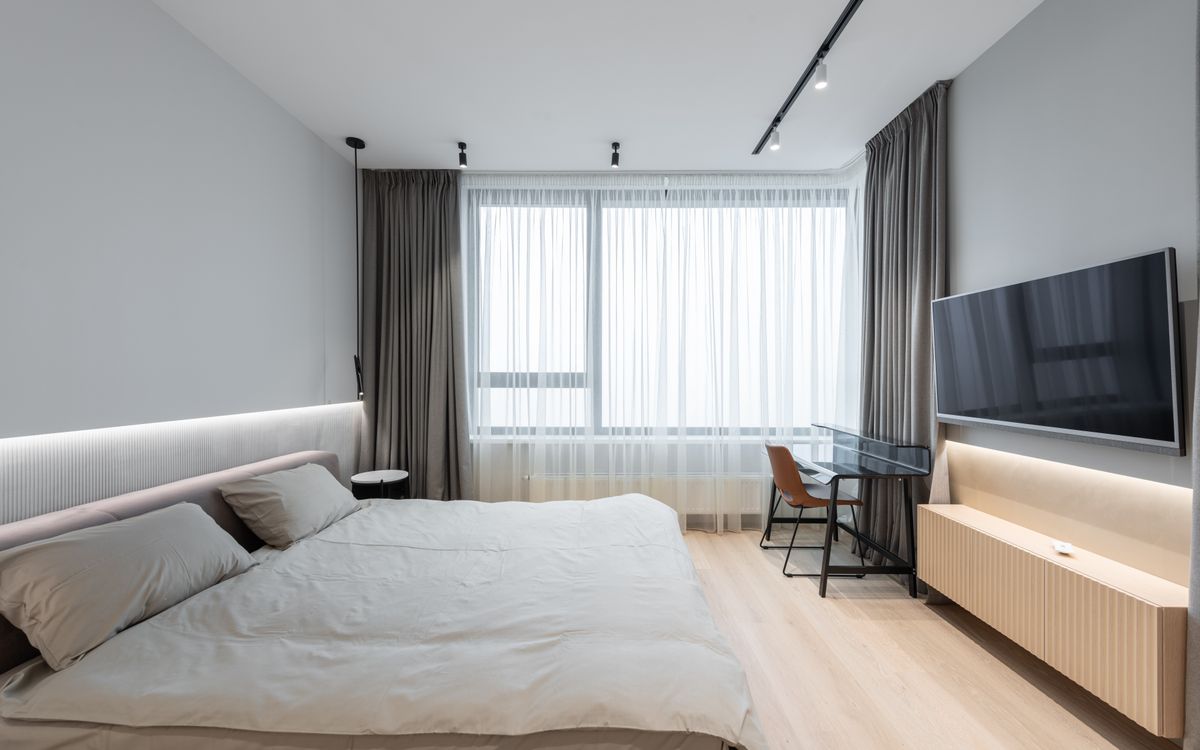
Minimalist bedrooms fail in a predictable way: someone clears the room to an empty shell, enjoys it for a week, and then life returns object by object because nothing was ever given a home. A minimalist room is not an empty room - it is a room where every object has a fixed address, and the addresses are invisible.
The checklist below runs in three passes: space first, storage second, materials third. I use this exact order on projects because the passes build on each other - deciding what storage you need only makes sense after you know what has to leave the room, and choosing materials only makes sense after you know how much of the room is left showing.
How to use this checklist
Work through the passes on separate evenings rather than in one heroic Saturday. Each pass ends with a written list, not a feeling - the point of a checklist is that you can disagree with yourself tomorrow and still have a record of what you decided.
One rule applies to all three passes: nothing gets bought until all three passes are complete. Buying organizers mid-process is how rooms end up full of beautiful containers for things that should have left the house.
Pass one: clear the surfaces, then the floor
Start with every horizontal surface: nightstand tops, dresser top, windowsill, and any chair holding clothes. Empty each one completely before deciding what returns. The test for an object’s return is simple - it either gets used daily from that exact spot, or it gets a home out of sight.
Then the floor. Visible floor is the single strongest signal of a calm room, more than any wall or bedding choice. Anything living on the floor that is not furniture - laundry, shoes, bags, a scale, a diffuser - moves into storage or out of the room.
Finish pass one with the walls. Take down everything except what you would hang again deliberately. Empty wall is not a loss; it is the canvas the rest of the room sits against. I photograph each wall at the end of this pass, because the bare-room photo is the reference point every later decision answers to.

Pass two: the storage audit
With the room visibly lighter, take stock of what remains hidden. Empty every drawer and closet section onto the bed once, sort into keep and leave, and count what actually stays. That count - not any catalog - tells you how much storage the room genuinely needs.
Three storage rules carry the rest. First, closed beats open: shelves you can see into become display shelves, and display becomes clutter. Second, everything off the floor: under-bed boxes, over-door hooks, and drawer dividers lift objects out of the room’s sightlines. Third, one category per container - a mixed junk drawer is a drawer you have to search, and searching means things get left out afterward.
If the audit shows more keeper than the room can hide, that is a sizing problem, not a willpower problem. The honest fixes are a taller dresser, under-bed volume, or fewer keepers.
Pass three: materials, limited on purpose
The third pass is where the room starts looking designed rather than merely empty. Limit the room to three visible materials in close tones - for most bedrooms that is painted wall, wood, and one textile family such as washed cotton or linen.
Texture replaces color as the source of interest. A room in white, oatmeal, and pale wood looks considered when the fabrics are matte and slightly rumpled, and looks flat when everything is the same finish. This is also the pass that protects against the “sterile” outcome - a minimalist room goes cold when every surface is smooth and shiny, not when it has few things.
Keep the pass honest by applying it to everything visible: lamp shades, curtain fabric, the picture frame if any, the throw. One rogue glossy or highly patterned object undoes more than three textural additions can restore.
The furniture shortlist
Most minimalist bedrooms run on four pieces: the bed, one or two nightstands, one storage piece (a dresser or wardrobe, rarely both), and optionally a chair. That is the whole list. Each additional piece has to justify itself against the floor space it covers.
Beds with integrated storage earn their footprint in minimalist rooms because they replace visible containers - my guide to under-bed storage options covers the trade-offs. If the room is tight, a floating nightstand or a wall shelf by the bed keeps the floor line unbroken, which does more for the style than any bedding choice.
What to do with the walls
Wall decisions come after the room is furnished, not before. The rule I work by: one large piece per visible wall, or nothing. A single oversized print or mirror reads as intentional; a gallery cluster reads as decoration, which is a different style’s signature.
Mirrors earn their place twice over in small minimalist rooms because they extend light and depth without occupying floor. If the wall above the bed stays empty, that is a valid choice - a clear bed wall is often what makes the whole room read as calm.
Signs you have crossed into sterile
Minimalism has a failure mode on the other side, and it is worth naming. The warning signs: the room photographs like a showroom but you avoid using it; there is no spot where a book or a glass of water can live without guilt; the bedding is perfect every morning because nobody actually sits on it during the day.
The correction is small and deliberate. Return one chair with a throw, one low shelf for a small stack of books, one bedside object you like looking at. A minimalist room should survive a cup of tea on the nightstand. If it cannot, it is a display, not a bedroom.
The maintenance rhythm
The system holds only with a light routine. Mine is a five-minute evening reset - surfaces cleared to their addresses, laundry into a closed hamper, the throw refolded where it lives - plus one monthly pass over drawers to catch creep. Creep is normal; unmanaged creep is what rebuilds the original clutter.
If you want the palette logic behind these material choices, the piece on modern bedroom style basics covers how a restrained base works in practice. And for the room-shape side of the problem - where the furniture goes once there is less of it - my walkthrough on walkways and clearance planning picks up where this checklist ends.
Frequently asked questions
- How many items should a minimalist bedroom have?
- There is no magic number, but a workable rule is that every visible surface should be able to go back to empty in one minute. In practice that means a bed, two nightstands at most, one storage piece, one lamp per bedside, and nothing else in the room's sightlines.
- What colors are best for a minimalist bedroom?
- One quiet base - white, off-white, or warm gray - used on walls and large textiles, with tone variation instead of color variation. Depth comes from mixing fabric textures in close shades, not from adding new colors.
- Can a small bedroom still work as a minimalist room?
- Small rooms are where minimalism pays off most, because every object competes for a tighter footprint. Prioritize closed storage and keep the bed wall clear; the smaller the room, the more valuable empty floor and visible wall become.