Style Ideas
Modern Bedroom Style: The Basics That Hold Up
The four elements that make a bedroom read as modern, how they work together, and where money actually changes the look at three budget levels.
By Mara Bennett · Published January 19, 2026 · Updated March 16, 2026
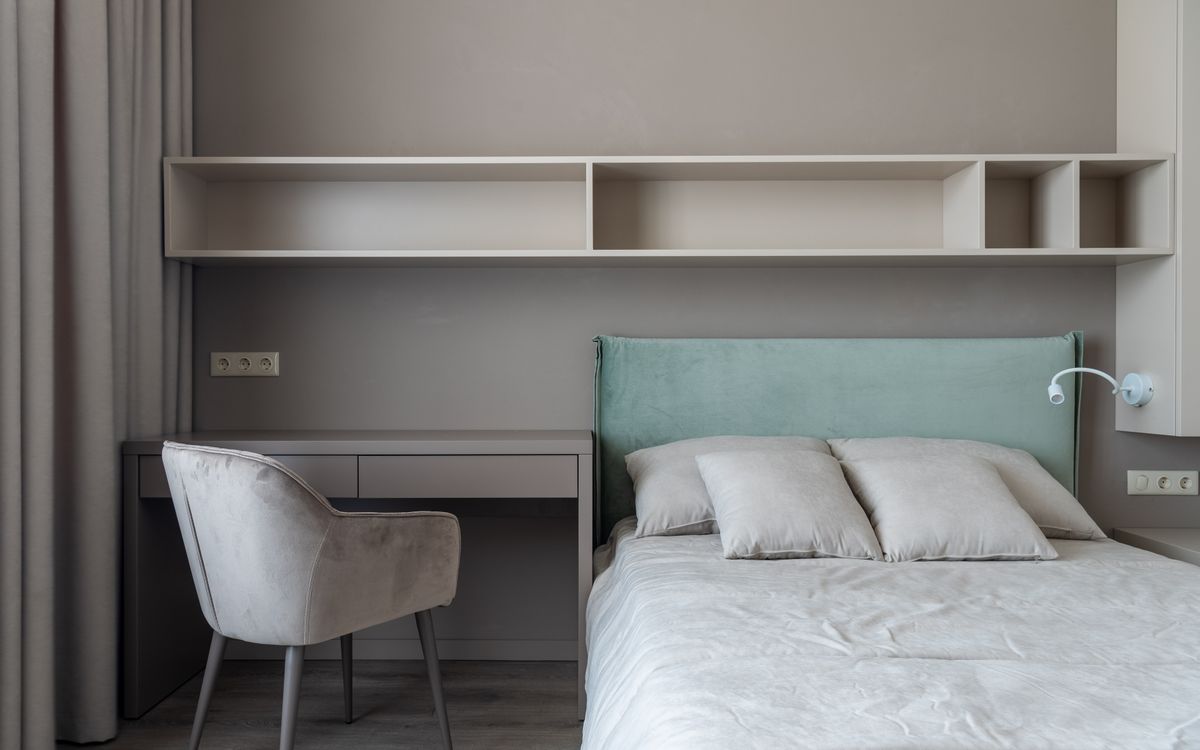
Modern bedrooms look effortless, and that is exactly why they are hard to pull off. The style reads as “just a good room” when it works, which means there is no ornament to hide behind. Everything that stays has to earn its place, and everything that stays also has to agree with everything else.
After a decade of styling small projects, I have settled on four elements that decide whether a bedroom reads modern or just unfinished. Get these four right and the room works at any budget. Miss one and the room drifts toward generic, no matter how much was spent.
What “modern” actually means in a bedroom
Modern, as a bedroom style, means three things at once: clean lines, a restrained palette, and furniture chosen for use rather than decoration. It is not the same as minimalist, which is a discipline about quantity. A modern bedroom can hold a reading chair, a stack of books, and a full bedding set, and still read as modern, because the pieces share a visual language.
The style also gets mislabeled as cold. That reputation comes from rooms that got the palette but skipped the texture. Warmth in a modern room comes from matte fabrics, natural fibers, and wood - not from adding curvy furniture back in.
Element one: a restrained base palette
The first element is a quiet base: white, off-white, warm gray, or greige on the walls and large textiles, with at most one darker anchor color used in small doses.
The mistake people make here is treating “neutral” as “colorless.” A modern room still has color temperature - warm whites against cool grays is a common and visible clash. Pick one temperature for the big surfaces and hold it. If your walls are warm white, your bedding and curtains should lean warm too, and the anchor color (charcoal, deep green, navy) does the contrasting work instead.
A useful test I run on client rooms: photograph the room, convert the photo to black and white, and check whether the picture still has depth. If the gray-scale version looks flat, the room is relying on color variety instead of tone contrast - a classic sign the palette has drifted.

Element two: low, clean-lined furniture
The second element is furniture with straight, simple lines and a low profile. Platform beds without footboards, nightstands that are boxes or slabs rather than cabinets with trim, and wardrobes with flat fronts.
Height is doing more work here than most people realize. Low furniture leaves more wall visible, and visible wall is what makes a room read as calm and open. A tall armoire in the same room changes the entire feel, even if its front is perfectly plain. If you must keep a tall piece, give it the least prominent wall and keep the bed wall clear.
Alignment matters as much as shape. Nightstands that match in height, a bed centered on its wall, dresser tops kept level with the windowsill where possible - modern rooms photograph well because their horizontal lines agree with each other.
Element three: one soft texture story
The third element is texture, but it has to be a coordinated story, not a pile of fabrics. I keep it to one main material family - usually washed cotton or linen - with one contrast texture, such as a wool throw or a boucle cushion, used once.
The reason is light. In a room with few colors and few curves, light falling on fabric is the main source of visual interest, and light reads best on matte, textured surfaces. Shiny sateen and glossy finishes work against the style because they break the matte field. This is also where budget buys more than anywhere else: an inexpensive room with good linen-look cotton and one wool blanket reads more expensive than a costly room in shiny fabrics.
Element four: light treated as a material
The fourth element is lighting, planned rather than inherited. Modern bedrooms work with three simple layers: a soft ambient source, one task light per bedside, and one low, warm accent for evening. The fixture style stays consistent - usually simple shades or bare, tidy bulbs in matching tones.
What modern rooms avoid is a single bright ceiling light doing everything, because one source flattens every surface in the room. If you cannot wire anything, plug-in wall lights or table lamps on dimmers cover the same ground. My long-standing setup in client rooms is bedside lamps on warm bulbs plus a floor lamp in the corner, and the ceiling fixture only for cleaning day.
Budget tiers: where money changes the look
The four elements cost nothing to plan, but they can be bought at very different levels. This is the split I give clients deciding where to spend:
| Tier | Spend it on | Skip it | Why |
|---|---|---|---|
| Under $300 | Bedding in matte textures, lamp pair, paint | New furniture | Fabric and light carry most of the style; existing furniture in plain colors reads fine. |
| $300-$1,200 | A clean-lined bed frame, matching nightstands | Custom storage | One aligned furniture set fixes the room’s horizontal lines for years. |
| $1,200+ | Wardrobe with flat fronts, blackout curtains, a designer lamp | Everything matching | At this level, one signature piece does more than a full matching suite. |
The pattern in that table is the point: money buys quiet quality, not more stuff. The most common budget error I see is spending early on decorative pieces - wall art, cushions, mirrors - before the base palette and furniture lines exist. Decor cannot fix a room whose lines disagree.
What modern is not
Three drift patterns show up again and again, and each one quietly ends the style.
First, matching everything too literally. A bed, nightstands, dresser, and lamp all from one catalog set reads as showroom, not modern. Modern rooms allow pieces to differ in shape as long as they agree in line and tone.
Second, adding curve back in. One soft piece - a boucle chair, an arched mirror - is a contrast. Five curved pieces is a different style that has arrived without being invited.
Third, chasing the photo. Styled images of modern bedrooms show stripped surfaces and perfect angles, but the room still has to hold a water glass, a phone charger, and a book. Plan the storage for real objects first, then style.
A one-weekend order of operations
If you are starting from a room that reads as “nothing in particular,” the sequence that works is: clear every surface and the floor first; repaint or at least agree on one wall color; place the bed low and centered on its wall; align the nightstands; replace shiny bedding with matte textures; then add the two or three lamps. Decor comes last, in one pass, and anything left over goes to storage rather than back onto surfaces.
That order matters because each step constrains the next. The palette sets which fabrics work, the furniture lines set where lamps can sit, and by the time decor is placed, most rooms need less of it than expected.
If you want to go one step calmer than modern, the natural next read is a dedicated checklist approach - my minimalist bedroom checklist walks that process. And if the room is small and the palette is fighting you, the color choices in bedroom color palettes sorted by mood pair well with this system.
Frequently asked questions
- What colors work best in a modern bedroom?
- A quiet base of white, warm gray, or greige, with one darker anchor color used sparingly. Modern rooms stay calm because color is rationed, not because it is missing - a charcoal throw or a deep green pillow reads modern against a neutral shell.
- Is a modern bedroom expensive to achieve?
- No. The style depends on editing and low, clean-lined furniture rather than costly materials. Most of the look comes from clearing surfaces, aligning pieces, and choosing matte fabrics - all of which can be done at low cost or with what you already own.
- What is the difference between a modern and a minimalist bedroom?
- Minimalism is a discipline about quantity - as little as possible. Modern style is a look - clean lines and a restrained palette, but it allows art, a few objects, and comfortable layering. A modern room can be fairly full and still read as modern.