Layout Planning
The 3-Zone Rule for a Calm Bedroom
Divide any bedroom into a sleep zone, a dressing zone, and a buffer zone - the three-part method I use to make small rooms feel settled.
By Mara Bennett · Published January 26, 2026 · Updated January 26, 2026
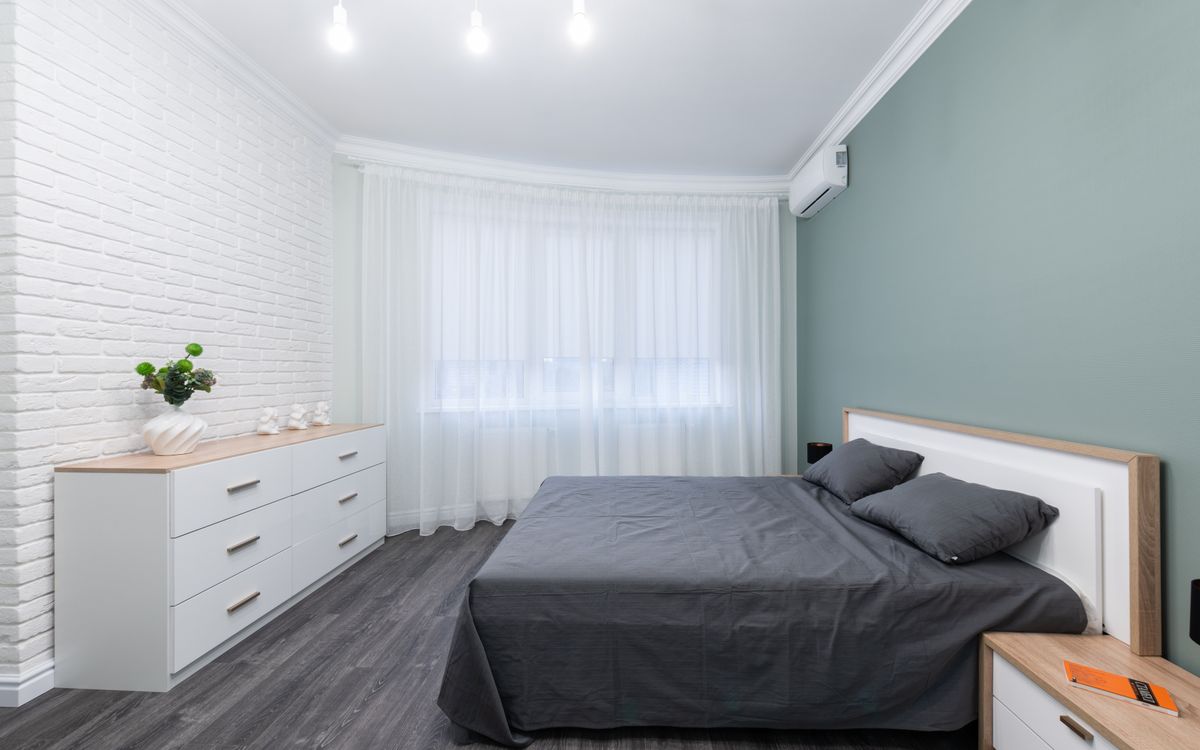
A bedroom feels calm when every activity has an address. Clothes get taken off in one place, dropped in another, and neither of those places is the middle of the floor. After enough rooms that refused to stay tidy, I stopped treating bedrooms as one space and started treating them as three. The rule has held up in every project since, from 8 m² city rooms to generous guest bedrooms.
Why zones beat furniture lists
Shopping lists do not make rooms calm. You can buy all the right pieces and still end up with a room where laundry lands on the bed because it has nowhere else to go. The problem is rarely the furniture; it is that every activity shares one undivided floor, so the most convenient surface for everything is the bed.
Zoning fixes this before you buy anything. When the floor is divided into a sleep zone, a dressing zone, and a buffer zone, each piece of furniture has a territory, and clutter has a home that is not the duvet. The bed position is the anchor for all three - which is why placing the bed first always precedes zoning in my process.
Zone 1: the sleep zone
The sleep zone is the bed plus the space needed to use it: 45 cm (18 in) on each side you actually use, enough headroom to sit up without bumping a shelf, and darkness deep enough to sleep in. In a small room this zone takes the largest share of floor, and it should.
Two rules keep the zone honest. First, nothing with a job enters it - no laundry baskets, no exercise equipment, no office chairs. The moment a zone gains a second job, it stops protecting sleep. Second, the surfaces inside it stay for sleep only: a lamp, a book, water. A nightstand that holds the week’s folded washing turns the bed into a sofa.
If the room allows a lamp on each side, the zone reads as finished even when it is sparse. If the room only allows one side, put the light there and let the other side breathe - asymmetry with intent beats symmetry with clutter.
Zone 2: the dressing zone
The dressing zone is where clothes live and change. Its furniture is the wardrobe or closet, the dresser if there is one, and a mirror. Its footprint is the furniture depth plus opening space: 60 cm (24 in) in front of a dresser, 75 cm (30 in) in front of a wardrobe with hinged doors.
The zone works best when it holds one wall entirely rather than scattering across two corners. A single dressing wall concentrates the mess of getting dressed into a strip of floor that can be closed off visually with a rug edge or a bench. When a dresser competes with a wardrobe on opposite walls, every outfit walks the room twice.
Where the dresser goes on that wall is a whole decision of its own - I wrote the seven placements I test separately, because drawer depth and door radius fail more rooms than any styling choice. What matters for zoning is simpler: everything clothes-related lives on one wall.
Zone 3: the buffer zone
The buffer zone is the space between the bedroom and the rest of the home: the door swing, the first two steps inside, and any lane that connects the sleep and dressing zones. It holds almost no furniture, and that is the point. Its furniture is at most a hook strip, a bench, or a rug that marks where the room begins.
The buffer does quiet work. It is where the phone charges instead of the nightstand, where the suitcase parks after a trip, where the door closes on the rest of the house. In studio apartments the buffer is what stops the bed from being the first thing a guest sees; a shelf partition or an open wardrobe back can serve as its wall.
If traffic through the room is confusing, the room-by-room traffic flow guide maps the same territory in more detail - the buffer zone is simply the traffic map with a job description.
Mapping the zones in a room you already have
The mapping takes twenty minutes and a roll of low-tack tape. Start from the door: tape the swing arc, then walk the natural path from the door toward the bed and tape that lane. What remains after the arc and the lane are marked is the raw material for zones.
Next, fix the sleep zone around the bed’s current position - or a better one, if the tape shows the bed is squatting in the natural walkway. Then assign the longest remaining wall to dressing. Whatever floor is left over belongs to the buffer, and the discipline is to leave it empty. Most rooms I tidy are not missing storage; they are missing an empty strip that everything else can lean against.
When two zones have to share
Small rooms compress the model, but they do not cancel it. Sharing works when each zone keeps its signature piece. A dresser can live inside the closet - that is the dressing zone borrowing the closet’s footprint. A bench at the foot of the bed can be both seating and buffer storage. What fails is mixing signatures: a desk that grows laundry, a chair that grows clothes, a nightstand that grows everything.
The other compression trick is vertical. A dressing zone that cannot spread sideways can stack instead - a rail above a low dresser keeps both functions on one small square of floor. If storage is the binding constraint, whatever frees floor belongs to the buffer zone’s budget, and reclaimed under-bed or closet space counts double in a compressed room.
What a calm room looks like when it works
You can diagnose zoning from the doorway in five seconds. The bed is visible and clear; the floor between the door and the bed is uninterrupted; clothes are nowhere in sight until you look toward the dressing wall. The room passes the morning test too: getting dressed never crosses the sleep zone, and nothing from the day’s clutter reaches the duvet.
None of this requires new furniture. It requires deciding, once, what each square of floor is for - and then defending that decision gently, rug by rug and hook by hook, until the room does the remembering for you.
Frequently asked questions
- What are the three zones of a bedroom?
- A sleep zone around the bed, a dressing zone for clothes and storage, and a buffer zone between the two and the door. Splitting the floor this way keeps work - dressing, laundry, suitcases - out of the place you rest.
- How big should each bedroom zone be?
- Let the sleep zone lead: the bed plus 45 cm (18 in) on each usable side. Dressing takes whatever remains along a wall, and the buffer is the leftover circulation space - usually the door swing plus a 60 cm (24 in) lane.
- Does zoning work in a very small bedroom?
- Yes, and it matters more there. Even in a 9 m² room you can zone by using one wall for dressing, keeping the floor around the bed clear, and letting a bench or rug mark the buffer edge instead of a wall.