Lighting & Ambience
The Best Bedroom Floor Lamps
Three floor lamps that work beside a bed - an arc for overhead reading light, a column lamp for small corners, and a classic diffused stand - with the trade-offs of each.
By Mara Bennett · Published September 16, 2026 · Updated October 21, 2026
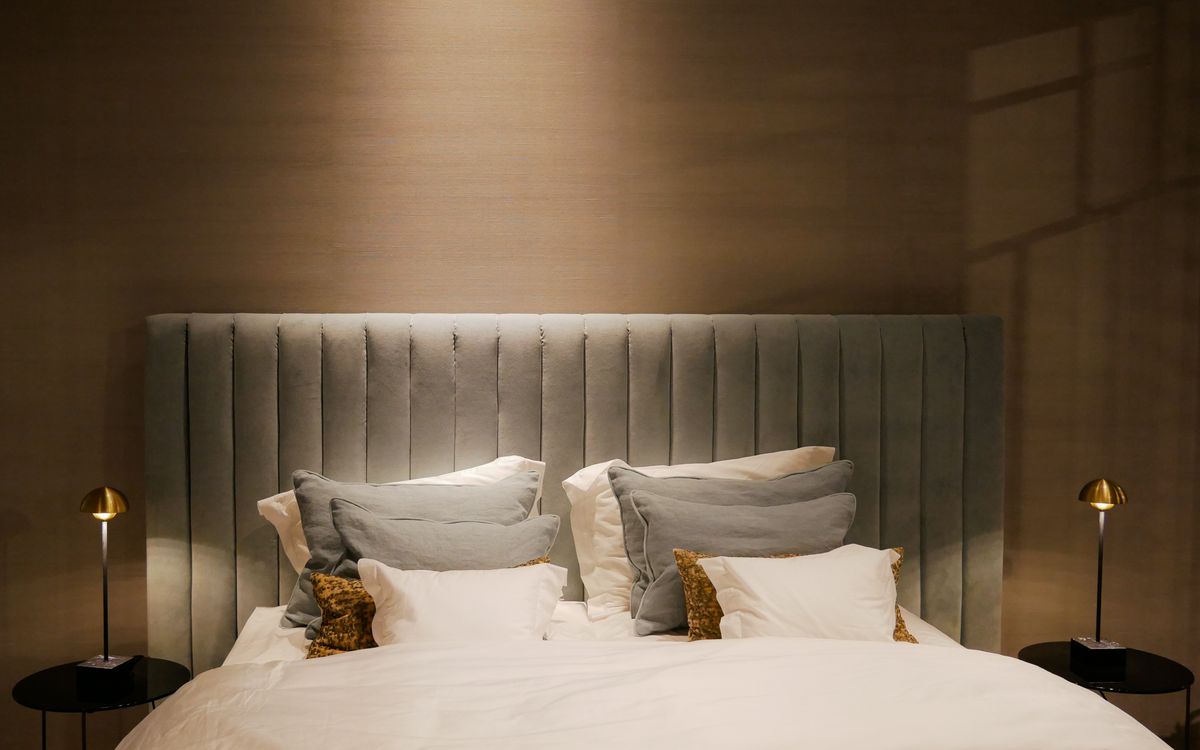
A floor lamp is the quiet workhorse of a bedroom. It takes over when the ceiling light goes off, it reaches corners a table lamp cannot, and on nights when you read in a chair instead of in bed, it is usually the only light doing real work. I have specified floor lamps in small-bedroom projects for ten years, and the same three shapes keep earning their footprint: the arc, the column, and the classic diffused stand.
This is not a list of thirty lamps with star ratings. It is three picks, each solving a different bedroom problem, with the trade-offs stated plainly.
What a bedroom asks of a floor lamp
Bedrooms are harder on floor lamps than living rooms, for three reasons.
First, the light is used seated and lying down, so glare control matters more than raw brightness. A bare bulb at eye level in a dark room is unpleasant in a way a living room never reveals.
Second, the lamp usually lives in a corner or beside a dresser, where floor space is contested. A wide base that reads as furniture in a living room reads as an obstacle next to a bed.
Third, you operate it half-asleep. The switch needs to be findable without thinking - a foot pedal, a pull chain, or a switch on the cord within arm’s reach.
Any lamp on this list passed those three tests on paper before it made the cut.
The three picks at a glance
I grouped the picks by shape, because shape decides placement more than style does.
- The arc puts light where a ceiling outlet is not - over the bed or a reading chair - using a weighted base parked out of the way.
- The column is the small-room option: slim, adjustable, and light enough in visual weight that it disappears into a corner.
- The classic stand is the finisher - a diffused, warm glow that makes the whole room feel finished at the end of the evening.
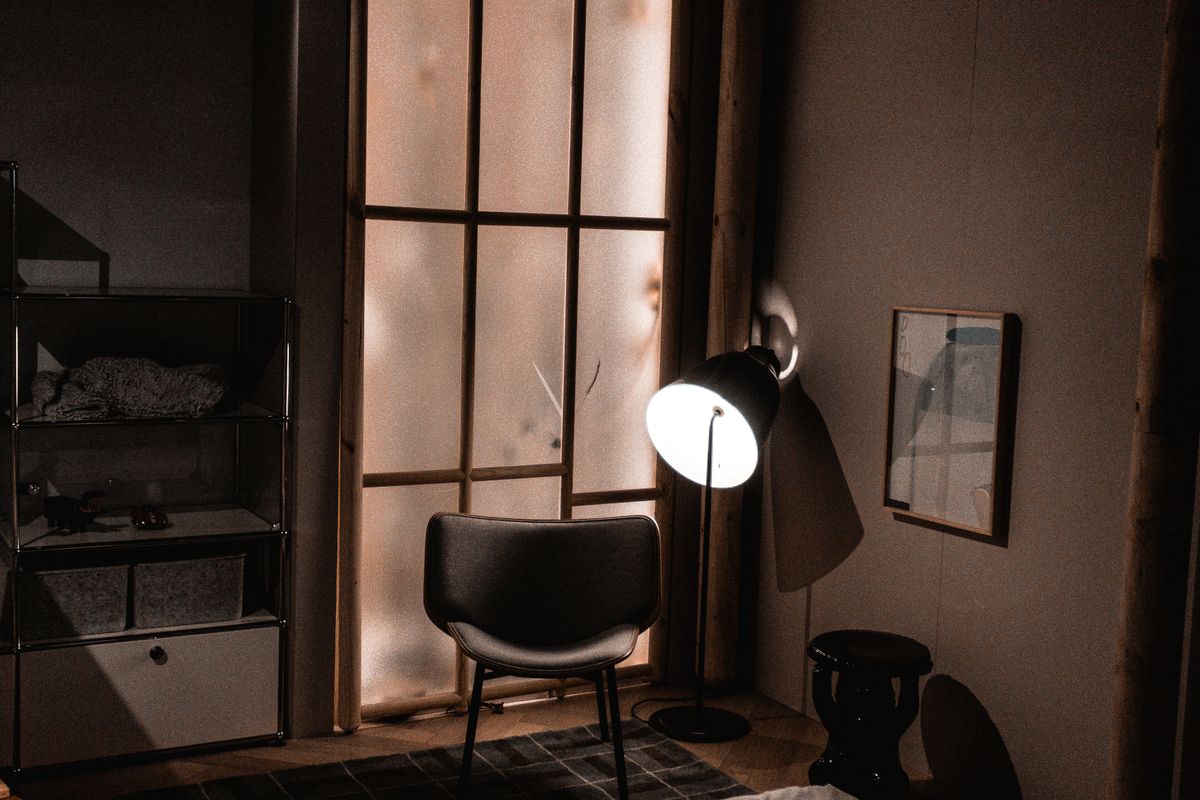
Pick 1: Brightech Logan LED arc floor lamp
The Brightech Logan LED arc floor lamp solves the problem that comes up in almost every bedroom I plan: you want overhead light beside the bed, and there is no ceiling fixture there - or anywhere.
The base is a slab of marble that weighs about 13 kg (29 lb), low enough at 3.8 cm (1.5 in) to slide under a bed frame or dresser. From that base, the steel pole arcs over and carries a fabric drum shade roughly 48 cm (19 in) across, so you get downlight positioned over the mattress instead of a glare source at pillow height. The arc is telescopic and reaches about 112 cm (44 in) horizontally from the pole, and the whole lamp stands 193 cm (76 in) tall.
The integrated LED is a 9.5 W unit rated at 800 lumens in 3000 K warm white - a reasonable reading brightness - and it is not dimmable, which is the pick’s biggest trade-off. The bulb is also proprietary to the fixture, so when it eventually fails you are ordering a replacement module rather than a bulb. Brightech covers it with a 3-year warranty, and the foot pedal switch is exactly the half-asleep-friendly control I described above.
Best for: bedrooms where the light needs to arrive from above without any wiring work.
The trade-off: no dimming, and the arc needs floor space for its footprint - it is not a lamp for a room already tight on circulation room.
Pick 2: IKEA LAUTERS floor lamp, ash/white
The IKEA LAUTERS floor lamp, ash/white is the pick I reach for most often in compact rooms, because it is the only one here that adapts to the room instead of demanding the room adapt to it.
The structure is a solid ash column with a fabric shade made partly from recycled PET, 38 cm (15 in) wide. The height adjusts from 120 cm (47 in) to 150 cm (59 in), which matters more than it sounds: lower it when the lamp sits behind an armchair so the shade stays below eye level, raise it when it needs to clear a dresser top. Excess cord wraps inside the base, which keeps the corner tidy - a small thing that shows up in every photo of a finished room.
It takes an E26 bulb, sold separately, up to 13 W LED. Pair it with a warm-dimming or standard 2700 K bulb and it becomes a genuine mood light rather than a task light; that is the trade-off. The diffused shade spreads light softly but does not concentrate it, so as a reading lamp it is adequate at best. One durability note from long-term owner reviews worth repeating: the wooden collar that locks the height adjustment can loosen over time, so treat the adjustment as a set-once-and-leave setting rather than a daily fidget.
Best for: small bedrooms and corners where a slim, adjustable, warm-glow lamp matters more than raw output.
The trade-off: soft ambient light only - pair it with a bedside reading lamp rather than asking it to do both jobs.
Pick 3: IKEA ÅRSTID floor lamp, brass/white
The IKEA ÅRSTID floor lamp, brass/white is the classic of the three, and after ten years of specifying bedroom lighting I still return to it when a room needs its evening light to feel finished rather than merely functional.
The proportions are the reason. It stands 155 cm (61 in) tall on a 28 cm (11 in) base, with a 36 cm (14 in) fabric shade that spreads a diffused, even glow through a pleated white column of light. The brass stem with the white shade reads as considered in almost any palette, from cool neutrals to warm woods. A pull chain on the socket is the switch, which is findable in the dark once you know the corner.
It takes an E26 bulb, sold separately, up to 100 W equivalent - the most generous headroom of the three picks, so the lamp can run a 9 W LED for ambiance or something brighter when the room needs a single light source to carry the whole space. The trade-off is stability and patience: the base is light steel, so the lamp is best placed out of traffic paths, and the shade fabric can arrive with assembly quirks that take a minute to seat properly.
Best for: rooms that want one lamp to provide the entire evening atmosphere, in a traditional or transitional scheme.
The trade-off: a lighter base than the arc, and no height adjustment.
Side-by-side specifications
Specifications below come from the manufacturers’ product pages at the time of writing; verify current specs before ordering.
The full numbers - height, light source, dimming, and base - are laid out in the comparison table that follows the pick cards at the end of this page.
How to choose between them
Match the pick to the room’s missing light, not to the style of the week.
If the problem is no overhead light where you need it - a bed against the far wall, a reading chair away from the window - the arc earns its footprint. Nothing else puts downlight over a mattress without an electrician.
If the problem is a corner that needs presence without weight, take the LAUTERS. The height adjustment and the slim column make it the most forgiving lamp in a room where the layout may still change.
If the problem is atmosphere - the room works but feels unfinished after dark - the ÅRSTID is the one. Diffused light from a fabric shade is the cheapest path to an evening bedroom that feels calm, and it layers well with bedside lamps rather than competing with them.
Placement notes that decide the outcome
A good lamp in the wrong spot reads as a bad lamp. Three rules from projects that survived real use.
Keep the shade above seated eye level. When you read in a chair, the bottom of the shade should sit above your line of sight to the room, roughly 120 cm (47 in) off the floor; the LAUTERS’ adjustment range exists for exactly this reason.
Never let an arc cross a walkway. The Logan’s arm is at head height for an adult standing up, and the base invites people to step over the pole. Park it behind the headboard corner or behind the chair, with the reach over the furniture, not over the path to the door.
Give the switch a dry run. Before you commit the corner, turn the lamp on and off three times the way you would at midnight - lying in bed, getting up, finding it without looking. If that fails, move the lamp, not the habit. For how the lamp fits into the larger light plan of the room, see the guide to bedroom lighting layers, and for the other half of the bedside pairing, the review of the best nightstand lamps for bedside styling covers the table-lamp side of the equation.
Care and longevity
Floor lamps ask little, but two habits keep them good for years. Dust the shade monthly - fabric shades hold dust visibly, and on a diffused lamp the dust actually dims the light. And check the base hardware twice a year; column and arc lamps rely on a few collar screws staying tight, and a wobbly lamp is almost always a loose collar rather than a broken one.
If you are tuning the lamp’s color temperature rather than shopping for fixtures, the kelvin temperature guide for bedroom light explains why 2700 K beats 4000 K everywhere near a bed.
The picks
Some links below are affiliate links — we may earn a commission at no extra cost to you.
Brightech Logan LED arc floor lamp
Best for: Bedrooms that need overhead reading light where no ceiling fixture exists
A 13 kg (29 lb) marble base parks out of the way while the telescopic arc carries a 48 cm drum shade over the bed or a reading chair, delivering downlight without any wiring work. The trade-off: the integrated 9.5 W LED is not dimmable, and the arc needs a dedicated footprint.
IKEA LAUTERS floor lamp, ash/white
Best for: Small bedrooms and corners where a slim, adjustable ambient lamp matters more than output
A solid ash column with a height range of 120-150 cm (47-59 in) adapts to the corner instead of demanding the room adapt to it, and excess cord hides in the base. The trade-off: the diffused shade is a mood light, not a reading light, and the height-lock collar can loosen over time.
IKEA ÅRSTID floor lamp, brass/white
Best for: Rooms that want one lamp to carry the entire evening atmosphere
The classic proportions - 155 cm (61 in) tall with a 36 cm (14 in) diffusing fabric shade - produce the soft, even glow that makes a bedroom feel finished after dark. The trade-off: the steel base is lighter than the arc's marble, so it belongs out of traffic paths.
Comparison
| Specification | Brightech Logan LED arc | IKEA LAUTERS | IKEA ÅRSTID |
|---|---|---|---|
| Height | 193 cm (76 in) | 120-150 cm, adjustable | 155 cm (61 in) |
| Light source | Integrated LED, 9.5 W, 800 lm, 3000 K | E26 bulb, max 13 W, sold separately | E26 bulb, max 100 W, sold separately |
| Dimmable | No | Yes, with dimmable bulb | Depends on bulb |
| Base | Marble, ~13 kg (29 lb) | Solid ash column | Steel, 28 cm (11 in) diameter |
Sources
- Manufacturer specification pages: brightech.com / amazon.com (Brightech USA store), ikea.com US product pages for LAUTERS and ÅRSTID (accessed at time of writing)
- Cross-checked against independent retailer listings (Wayfair, Meijer) for current pricing
Frequently asked questions
- Where should a floor lamp go in a bedroom?
- The best spot is the corner opposite or diagonal from the bed, close enough that the shade lights your reading position without glare hitting the pillow. If the lamp is meant to replace a ceiling light, place it near the center of the room against a wall, never blocking a walkway.
- How tall should a bedroom floor lamp be?
- Between 140 and 175 cm (55 and 69 in) suits most bedrooms, with the shade bottom sitting above seated eye level, around 120 cm (47 in). Taller arc lamps up to 213 cm (84 in) work when the light needs to reach over a bed or reading chair.
- Are arc floor lamps safe in a bedroom?
- Yes, if the base is heavy and the arc does not cross a walkway. Look for a marble or weighted base, keep the arm away from door swings, and place it where nobody will bump the shade in the dark.