Lighting & Ambience
How to Light a Bedroom Without Overhead Lights
Four ways to light a bedroom with no ceiling fixture - floor lamps, plug-in sconces, table lamps, and power planning - without calling an electrician.
By Mara Bennett · Published May 20, 2026 · Updated May 20, 2026
Plenty of good bedrooms have no ceiling fixture at all - rentals, older buildings, rooms where the only ceiling wiring serves a fan that nobody wants. The room does not suffer for it. What it needs is someone to stop expecting one bright point to do everything and instead distribute the light where it gets used. I have set up several of these rooms over the years, and the same four-piece kit works every time, with no electrician and no landlord conversation.
First, map what you actually do in the room
Before buying anything, spend one evening noticing where you want light and when. Getting dressed near the wardrobe, reading in bed, moving between the door and the closet at night, maybe a chair where you fold laundry. Each of those moments is a light zone, and the zones are your shopping list.
The mistake to avoid is buying one large lamp to compensate for the missing ceiling light. A single tall lamp in the corner gives you one bright corner and three dark ones - the same problem as a ceiling fixture, just lower down. What works is several modest sources spread across the room, each matched to a zone from your evening of noticing.
Plug-in floor lamps do the ambient work
The ambient layer - the light that lets you see the whole room - comes from floor lamps, because they throw light from above furniture height and spread it widest. Two floor lamps, or one floor lamp and one tall table lamp, placed diagonally across the room from each other, will cover what a ceiling fixture used to. The diagonal placement matters: light from two opposite corners leaves no dark zone in the middle, which is exactly the failure mode of the single corner lamp.
Bulb-wise, aim for around 800 lumens in each - ENERGY STAR’s brightness chart equates that with an old 60-watt bulb - and put them on dimmers or dimmable bulbs so the room can drop to half brightness after you stop moving around. My floor lamp picks cover the shapes that suit bedrooms, from slim columns that hug a wall to tripods that fill a corner.
Wall sconces without wiring
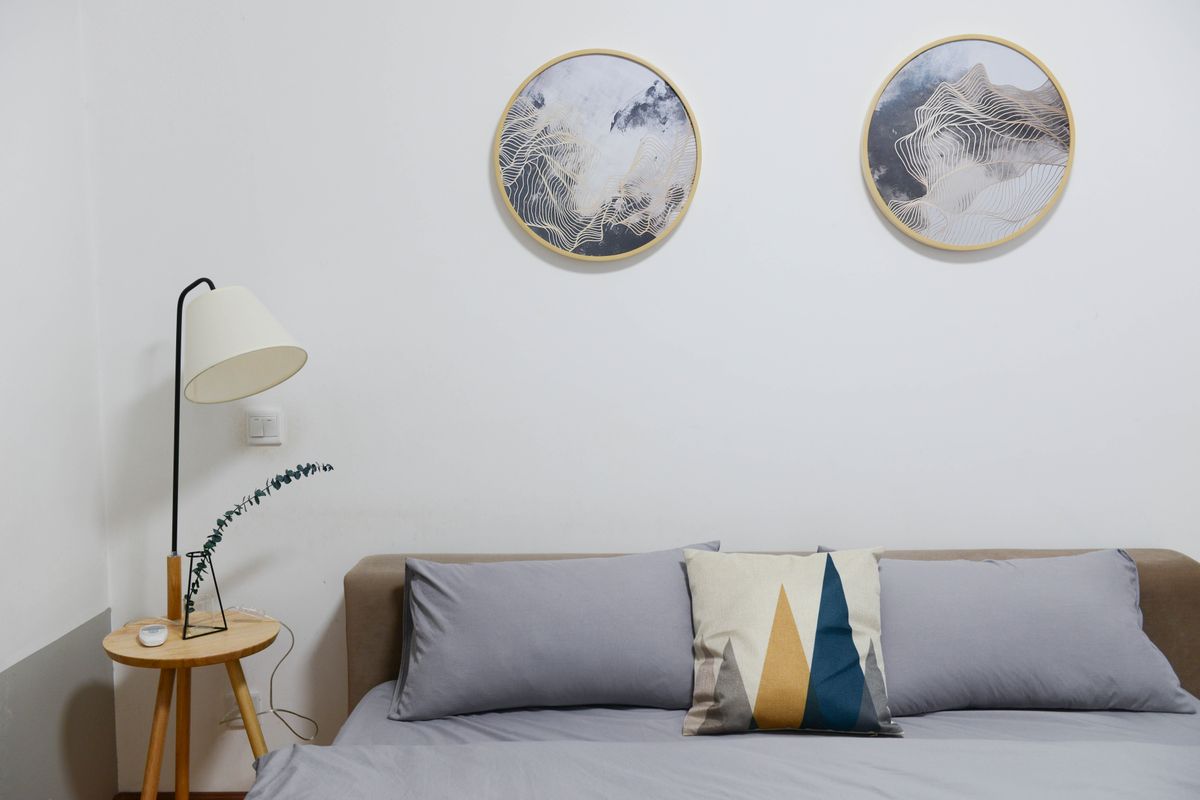
Plug-in sconces are the least-known tool in this setup and the one that changes the room most. A corded sconce mounts to the wall at exactly the height a task light should sit - beside the bed, above a dressing area - and plugs into a normal outlet. The cord runs down the wall, and if that bothers you, a fabric cord cover turns it into a deliberate vertical line.
Two placements earn their keep. Beside the bed, a sconce at shoulder height when sitting gives reading light without eating nightstand surface, which is a genuine gain in small rooms - my sconce picks include several made for exactly this. Above or beside a vanity or dresser, a second sconce gives you the dressing light the ceiling would have provided.
Choose corded over battery versions for anything you use daily. Battery sconces are convenient to mount anywhere, but their light output fades as the charge drops, and a bedroom’s primary reading light should not depend on a charging schedule.
Table lamps complete the zones
Table lamps handle the mid-level light that floor lamps and sconces leave out: the nightstand, the dresser, a desk. A bedside table lamp with a bulb in the 450-lumen range is plenty for reading, and a small lamp on the dresser doubles as accent light once the room’s main sources go down.
The placement habit I use is one light source per zone, no more. A nightstand needs exactly one lamp, and if that lamp’s light spills too widely, the fix is a shade swap, not a second lamp. This keeps the room from accumulating light sources until the outlet supply runs out - which is the other failure mode of no-ceiling-light rooms, the one where every surface ends up carrying a lamp.
Plan the power before the fixtures
No ceiling light usually means limited outlets, so count yours before shopping. You need one outlet for each ambient source, one for the bedside light or its sconce, and a spare. If the room has only two usable outlets, a flat-profile extension cord with multiple sockets, run along a baseboard and taped or covered, is the honest solution - it is temporary, safe if not overloaded, and fully removable.
Two habits keep this safe and tidy. Never chain one extension cord into another, and match the cord to the load - two 800-lumen LED lamps draw very little power, so a basic indoor cord handles the whole setup easily. Clip the cord to the baseboard line so nothing crosses a walking path. This is the least glamorous part of the job and the reason the room ends up looking finished rather than improvised.
What to avoid
Three patterns undo this setup. First, cool bulbs: without a ceiling fixture, your lamps carry the whole room’s color temperature, and anything above 3000K will make the room read clinical - the kelvin guide explains the scale, and 2700K is the safe default. Second, one oversized lamp as a ceiling substitute, for the corner-brightness reason above. Third, fixtures so tall they block the window or the wardrobe door; in a no-ceiling-light room the lamps are furniture too, and they need to fit the room’s traffic lines, not just its outlets.
A starter kit for a rented room
If you want the whole setup in one list: two floor lamps with 800-lumen dimmable bulbs at diagonal corners, one bedside lamp at 450 lumens or a plug-in sconce above the nightstand, one small dresser lamp under 200 lumens as the accent, and a flat extension cord if the outlets are sparse. Total cost sits below what a hardwired ceiling fixture and its electrician would run, the landlord gets the room back exactly as they leased it, and the light ends up better distributed than most ceiling fixtures ever managed - because the reason this distribution works is layering, not quantity.
Frequently asked questions
- How do you light a bedroom with no ceiling light?
- Build ambient light from two plug-in floor or table lamps placed on opposite sides of the room, add a reading lamp at the bedside, and use plug-in wall sconces where floor space is tight. Two medium light sources beat one bright corner lamp because they eliminate dark zones.
- Do plug-in wall sconces work without wiring?
- Yes. Corded sconces mount to the wall with screws or heavy-duty hooks and plug into a normal outlet, with the cord running down the wall inside a cord cover. Battery versions work too, but they dim as the battery drains, so corded is the better primary source.
- How bright should bedroom lamps be without a ceiling fixture?
- Use bulbs around 800 lumens - the brightness of an old 60-watt bulb - in the two ambient lamps, and 450 lumens or less in the bedside reading lamp. That combination covers a typical bedroom without any fixture on the ceiling.